
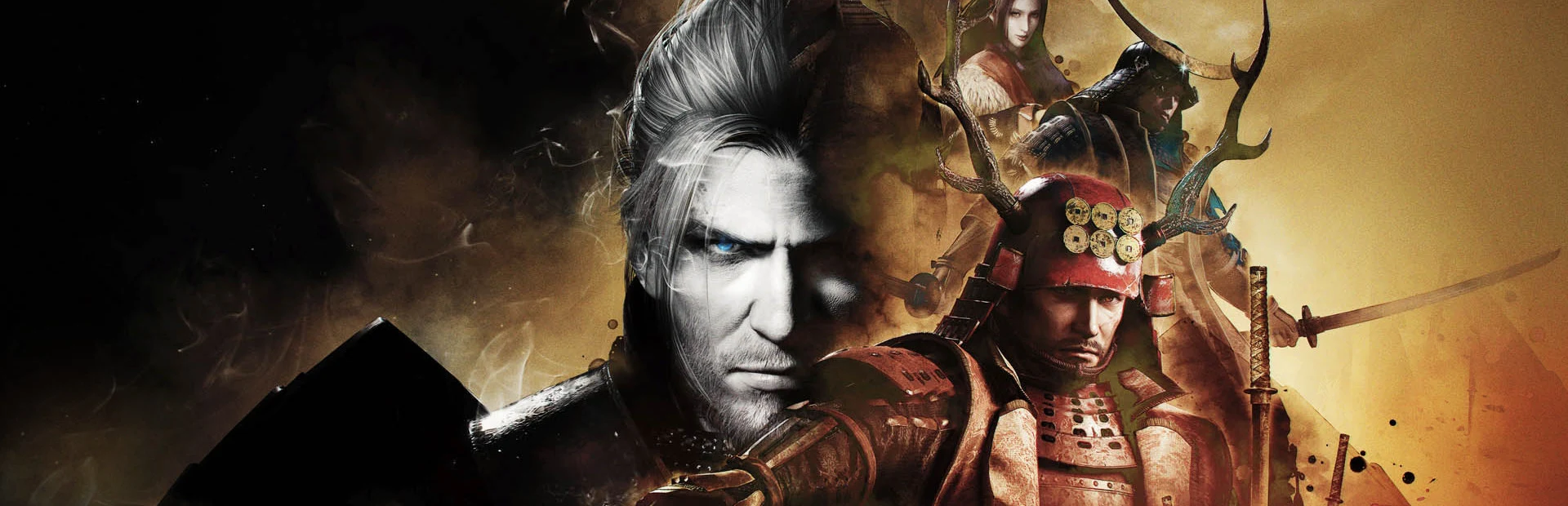
About Nioh
Developed by Team Ninja and Kou Shibusawa, Nioh reached PlayStation 4 in February 2017, PC as Nioh: Complete Edition in November 2017, and a remastered Complete Edition on PlayStation 5 in February 2021. This review covers the original Nioh, the 2017 game, with the three expansions - Dragon of the North, Defiant Honor and Bloodshed's End - in scope, because the Complete Edition is the version most people will actually buy. It is not Nioh 2 and it is not Nioh 3.
Three stances and one pulse
Every weapon is held in a stance, and the stance decides what your attack even is. High stance hits harder and burns Ki fast, and your dodge becomes a single slow roll. Low stance is quick, cheap and short-ranged, and its dodges barely cost anything, so you can keep slipping around a fast enemy. Mid stance sits in the middle, holds the best guard, and is where the parries live.
The cost is the point. Attacks, dodges and sprinting spend Ki, as does blocking a hit. An empty gauge limits your actions; taking a hit while empty can leave you exhausted. Draining an enemy's Ki creates an opening, but humans and yokai respond differently. Watch the target rather than assuming every empty bar means the same grapple opportunity.
Then there is the Ki Pulse, which is the thing that separates a player who is surviving Nioh from a player who is enjoying it. You press the stance button right after an attack and pull back a chunk of the Ki you just spent. Do it as the timing window closes and you get more of it back. Miss it and you are left standing there with a red bar and something with too many arms closing in. Fights in Nioh stop feeling like trading damage once the pulse clicks, because now you are managing a resource the enemy is also trying to take from you.
The Living Weapon is this game's big button
Collecting Amrita fills the gauge for your Living Weapon. When it is full you can trigger your Guardian Spirit's Living Weapon, and for as long as it lasts your health and Ki gauges are replaced by one weapon gauge that drains with time, with the damage you take, and with everything you do. While it is up you take no damage from enemy attacks and your melee hits land harder, and pressing the same combination again fires off the spirit's own special attack.
Guardian Spirits are the rest of that package. Each one brings passive boons and they protect the Amrita you are carrying when you die, which is more important than it sounds. The Complete Edition's later state adds more: spirits can be upgraded with Amrita once you are into New Game Plus, and a later patch added a second spirit slot that hands over a passive bonus and a combination effect on top of your main one.
Graves, Glory and the Hidden Teahouse
Amrita pays for character levels at a shrine. On death, your Guardian Spirit guards the unspent Amrita you left behind; your equipment stays with you. Recover the grave to reclaim it. Die again before retrieval and that lost Amrita is gone. Calling the spirit back through the shrine also forfeits the Amrita it was guarding.
That is not the only reason to go grave-hunting. Bloody Graves are the revenants: developer-placed fighters with set gear and a red name, and echoes of other players who died in that spot. They can drop pieces of their equipment and Ochoko cups, which are the currency for calling another player into your game. Later on, the Hidden Teahouse opens once you have cleared Spider Nest Castle, and that is where Glory - earned by putting revenants down - buys you items, rare gear, gestures and a new face.
Twilight Missions, Kodama and fighting with someone
The campaign runs through regions, with main and sub missions, and then the Twilight Missions sit on top of it. Those are harder versions of certain main missions with better rewards, and you cannot touch one until you have beaten the boss of the normal version. Two of them rotate each day, so there is a reason to open the map and look at what is on.
The Kodama are the game's collectible with a genuine payoff: guide the lost ones back to the shrines and each region lets you choose blessings that improve rewards such as Amrita or item drops. If you want the fights to go a little smoother, this is the cheapest way to buy it.
For the people you actually play with, Nioh keeps it simple. Offer an Ochoko cup at a shrine and the game looks for a visitor, or open the Torii Gate and pick a mode: Yokai Realm with a Companion, where the two of you can revive each other and share a survival gauge that drains on death and refills a little at shrines, or random encounters where there is no safety net at all. Password play arrived in a patch, and the rule is the same either way - the mission has to be unlocked before it can be shared.
Where the game asks you to work
None of this is light. Once the expansions are in, Nioh hands you weapon skills for seven melee weapon families, two magic trees in Onmyo Magic and Ninjutsu, ranged weapons in bows, rifles and hand cannons, and a steady rain of loot with set bonuses on it. Readied Ninjutsu and Onmyo Magic replenish when you pray at a shrine. Ammunition and ordinary consumables need their own supply, and the Blacksmith offers plenty of ways to spend the materials you bring home.
It is also the reason the game still has a reputation for being dense. If you want a samurai action game where you can ignore the equipment screen, this is not it. If you want one where the loot is part of the appeal, Nioh has more than enough to keep a build tinkerer busy for a very long time.
The three expansions
Nioh was supported the way a lot of games are not: three story expansions in one year, all of them included in the Complete Edition and all of them sold separately at the time.
Dragon of the North, the first, took William to the Oshu region to deal with Date Masamune, the one-eyed dragon, and added the Odachi as a new weapon along with a set of new Guardian Spirits. Defiant Honor moved to the winter siege of Osaka, brought Sanada Yukimura into the story and added tonfa. Bloodshed's End closed it out in the summer campaign of the same siege, with the final chapter of William's story and the Janomecho spirit finally available to everyone.
The expansion missions continue the story after the main campaign. Finish the main quest and make sure the relevant expansion is installed before looking for its missions. The shrine's Boons menu is used for bonus items such as the Steam helmet; it is not a substitute for story progression.
Which version to buy
The plain answer is Nioh: Complete Edition, because it is the full game plus Dragon of the North, Defiant Honor and Bloodshed's End in one purchase. On PC it is the only version that exists, released in November 2017, and it still carries a Steam-exclusive helmet that you claim from the same shrine Boons menu. On PlayStation 5 the remastered Complete Edition arrived in February 2021 and includes the expansions too.
At launch the choices were the base game, a Season Pass, and a Digital Deluxe edition that bundled the game with the pass, a weapon pack and a PS4 avatar. Those matter if you are buying a disc second-hand, because a base game disc is not the Complete Edition.
What is waiting after the credits
Finishing Nioh does not finish Nioh. The credits unlock Way of the Strong, and from there the difficulty ladder continues through Way of the Demon, Way of the Wise and finally Way of the Nioh. You can switch between them from the map menu whenever you like, so there is no reason to be stuck on a tier that is punishing you.
Each rung changes what you can find and carry. Divine equipment forms a large part of the higher-difficulty loot chase, with Ethereal gear arriving in Way of the Wise, and the stat ceiling and your Guardian Spirits' own upgrade limits climb as you go. New Game Plus also opens the Abyss, a floor-by-floor challenge run that you can bring up to two visitors into, and it is as far as the progression goes.
That ladder is the honest reason Nioh is still worth playing. The fight you learn in the campaign is the same fight at the top, but by then you have a character built around it, and the Ki bar you were scared of in the first hour is the thing you are playing with.
Should you play it
Yes, if you want the version of this combat system where the resource bar is the star and the power fantasy is a Guardian Spirit turning into a weapon. The Complete Edition is one purchase, the three expansions finish the story, and the difficulty ladder gives you more Nioh instead of a bolted-on endgame. Start on Way of the Samurai, learn the pulse, and the rest of the game opens up.
Skip it, or wait, if you are coming here from Nioh 2 expecting the tools that game added. Burst Counter and Yokai Shift belong to the sequel, not to this one, and playing Nioh as though they are here will feel like a step backwards rather than a prequel. Skip it as well if a constant equipment screen is what made you bounce off the series before: Nioh is the entry that asks the most of your patience with menus, and the expansions assume you have already made peace with them.
Go deeper with V4mp
- Developer
- KOEI TECMO GAMES CO., LTD.
- Genre
- Action
Explore Nioh further
Explore the wiki for detailed reference pages on the game's world, systems, items and locations.