
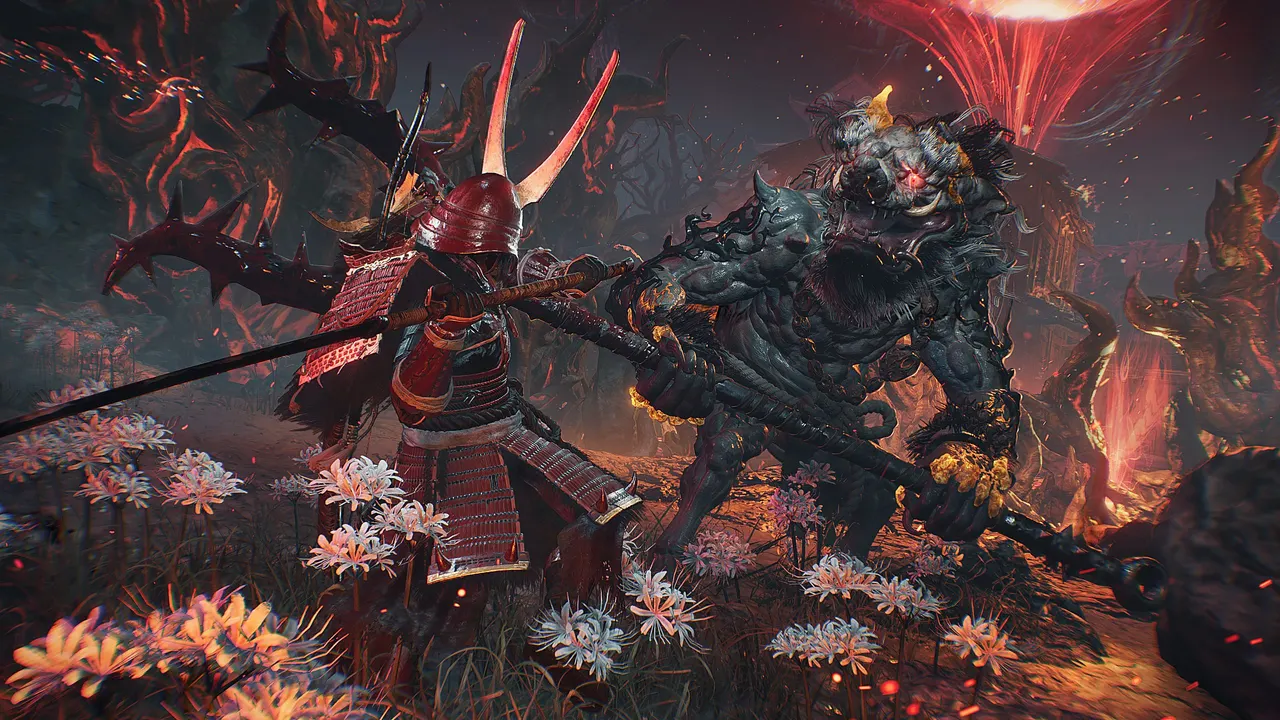
Nioh 3 Samurai and Ninja Styles
On this page
Choose the style that answers the attack
Samurai Style is for standing your ground. It improves attack power and guarding, lets you work through High, Mid, and Low Stances, and rewards the timing of a Ki Pulse after an attack. A precise guard becomes a Deflect, which nullifies the attack, restores Ki, and charges both the Arts and Ninjutsu gauges. That makes Samurai a good first answer when you need to learn a boss’s rhythm instead of racing around the arena.
Ninja Style trades that grounded exchange for mobility. It uses less Ki, moves quickly, and deals more damage from behind. Its Ninjutsu Gauge fills through attacks and evades, then pays for ranged attacks and movement tools. A precise Evade lengthens dodge invulnerability and can chain into another dodge. Use it to pass through a dangerous string, take the back, then leave before the enemy turns.
Do not treat Mist like a Ki Pulse
Mist is a Ninja dodge that consumes no Ki. Near an enemy it creates a temporary decoy, which can create room for a rear attack or escape. It is valuable, but it does not recover Ki or purify a Yokai Realm. If a Yokai Realm is slowing your recovery, return to Samurai Style and use a Ki Pulse after attacking. That difference matters most in a Crucible, where forcing the wrong answer can leave you without Ki and without a clean retreat.
| Situation | Samurai response | Ninja response |
|---|---|---|
| A normal close-range string | Guard, Deflect, then use a short punish | Evade through the decisive hit and reposition |
| An opening after your own attack | Ki Pulse to recover spent Ki | Mist to move safely, without Ki recovery |
| A Yokai Realm pool | Ki Pulse can clear it | Mist cannot clear it |
| A rear opening | Change stance for the move you need | Take the rear damage bonus |
Build both loadouts around one purpose
Weapons, armour, accessories, and Guardian Spirits are equipped separately for Samurai and Ninja. Let that separate equipment do real work. A guarded Samurai setup can carry the weapon and armour you trust in a close exchange; a Ninja setup can favour a lighter route and a weapon you can use after an Evade. You do not need matching gear in both slots.
Style Shift is the bridge. Use it deliberately: switch to Ninja before a mobile phase, return to Samurai when you need to guard or clear a Yokai Realm, and make the timed shift only when a red-aura Burst Attack gives you the Burst Break opening. Ki Pulse and Burst Break covers that counter. Weapons and Weight helps you keep each style’s equipment from fighting its own job.