
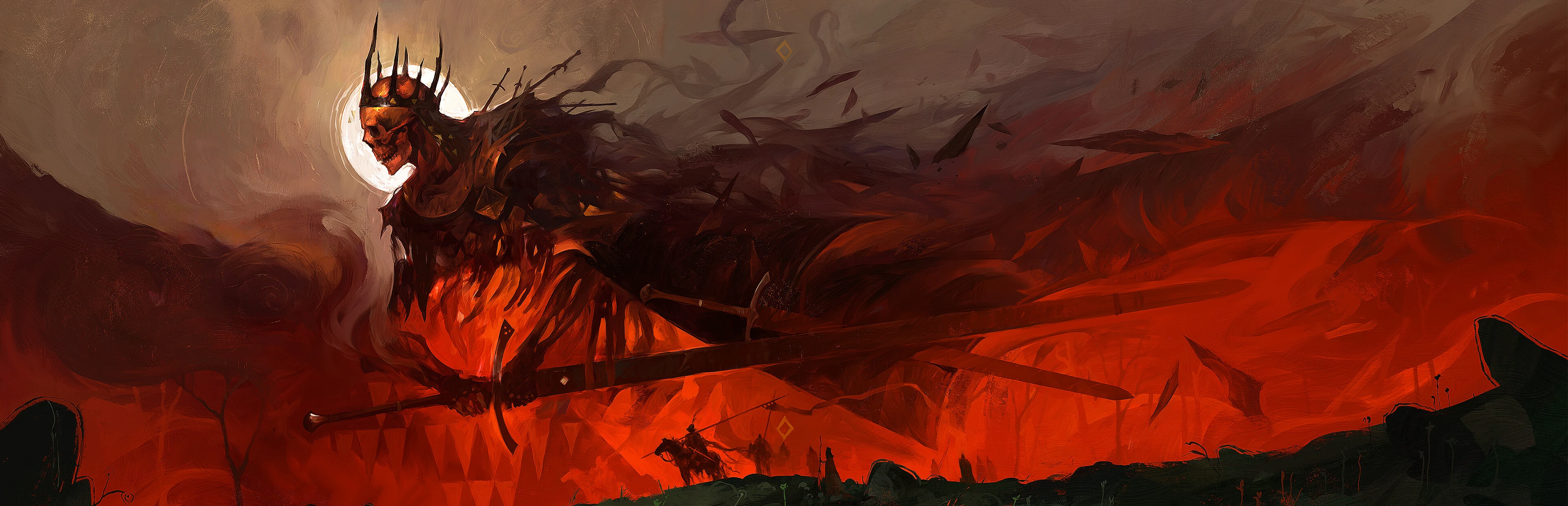
About Tainted Grail: The Fall of Avalon
Questline and Awaken Realms built a first-person, open-world RPG on top of Arthurian myth rather than a retelling of it, and they have kept feeding it long after launch. The question that matters is whether the world underneath is worth walking all of it.
What you are actually playing
Tainted Grail: The Fall of Avalon is a first-person, open-world RPG with a branching main story, hundreds of side quests and a very dark idea of what Camelot left behind. It spent two years in Early Access before it launched properly on PC, PlayStation 5 and Xbox Series X|S, and it is a single-player game: there is no co-op, so every decision in Avalon is yours alone.
It is a big game: three distinct zones — the misty Horns of the South, the sunlit Cuanacht Village and the frozen peaks of the Forlorn Swords — with a branching story running through all of it. You can spend an evening wandering off-plan and still come back with something worth the detour.
Avalon is the world, and the walk is the point
What separates this from the rest of the open-world pile is the refusal to be tidy. Avalon is stuck in an endless autumn, its legends are visibly falling apart, and the game is built for you to explore at your own pace and in your own order. The three zones each carry their own mood: mist and mud, a sunlit village built on someone else's decisions, and a frozen act three that has been reworked more than once.
It is also a game that rewards the smallest kind of exploration. Hidden items, story secrets, dungeons and one-off enemies are scattered through the map alongside the quests, and the side systems are unglamorous: fishing, farming, cooking, alchemy, blacksmithing, mining, journaling and even managing a house. If you are the type of player who reads every note, this is a game that keeps paying you for it.
Night is a different game
One mechanic does more than anything else to keep Avalon from becoming a scenery tour. At night the Wyrdness comes down over the land, alters reality and makes your foes fiercer, and the practical effect is that the clock becomes a resource: time you spend looting in daylight is time you are not spending somewhere you cannot afford to be caught.
That is a genuinely good design choice, because it turns a familiar day/night cycle into a route problem. You are not deciding whether the night is pretty. You are deciding whether you can finish what you are carrying, and whether the potions you brewed are enough to cover the trip home.
Quests, choices and endings
The main story picks up the legacy of King Arthur six centuries after his fall and hands you the shape of what comes next. It branches as it goes and lands on more than one ending, and the questlines are fully voiced in English, with a dozen languages offered for subtitles and interface. For an RPG of this size that is a real commitment, and it is the part of the package most likely to decide whether you finish the run.
The honest read on the writing is that Avalon's strength is atmosphere rather than subtlety. It is a bleak game, and it stays bleak in its side content as much as its main plot: the factions are not clean, and you will spend a lot of the game deciding which of two bad options you can live with. If you want a story that hands you a clearly correct answer, this is not the one.
Builds, and the fight itself
Character building is mostly about mixing attributes, skills and gear into the shape you want — a berserk alchemist, an undead-summoning blacksmith-mage, a stealth archer, or something nobody has named yet. Combat runs on the same freedom: melee weapons, shields, bows, magic, throwables and mixtures, with dodging, parrying and blocking as the defensive layer, and nothing stopping you from carrying several of those at once.
Since launch the game has also grown the systems around that loop. New Game Plus and a transmog system arrived in one of the big post-launch updates, and the free content packs since then have added item sets that specifically flesh out the archer and mage ends of the build space. Balance is an ongoing project, which is its own warning: one of the larger updates exists largely because players were getting very strong very fast in the back half of the game.
What it costs you
Performance is worth checking on your intended platform. Optimisation updates and an Ultra+ preset for high-end PCs do not establish how the game will run on your hardware; recent footage captured on a comparable system is more useful than an old patch note.
The game was designed around a first-person camera, with an optional third-person view added before launch. If you prefer third person, look at current footage of that mode before deciding whether its camera and combat presentation suit you.
The third is the difficulty curve. The back half of the game gets easier than it should: the second half of act two and act three hand out more power than most players want, and the balance pass that followed is partly optional, so you can keep the strong version if you like it. Just remember that the numbers you knew at launch are not the numbers you will get.
Base game, expansions and what comes free
This review covers the base game, and it is worth being precise about what sits outside it. The paid additions are the Sanctuary of Sarras expansion, a new zone with a storyline of its own and roughly 10 to 15 hours of content, four bosses, twelve new enemies, more than twenty dungeons and interiors and over a hundred items, plus the Supporters Pack with the soundtrack, a digital artbook and cosmetic horse armour.
The free content is the more interesting story. Merlin's Tomb is an endgame dungeon buried in the Forlorn Swords that only opens once you have collected every King's Soul fragment, and it is tuned for characters around level 75. Challenge Mode is a separate, much harsher way to play in which you take escalating debuffs as you grow stronger; it can only be chosen on a brand-new run and cannot be switched off afterwards. On top of those, four free bonus packs have dropped extra weapons, armour and item sets between them, including dedicated gear for archers and casters, most recently this year.
Should you play it
Yes, if you want a big, gloomy, first-person RPG that trusts you to find your own route, and you would rather have a world full of odd systems than a corridor of set pieces. The Wyrdness nights, the three-zone structure and the sheer amount of voiced side content are the reasons to take the trip.
Skip it if you want a brisk adventure or choices with an obviously right answer. Avalon asks for patience with exploration, conversations and character building; its bleak setting will matter as much as its combat to whether you want to stay.
Go deeper with V4mp
- Developer
- Questline
- Genre
- Open-world RPG
Explore Tainted Grail: The Fall of Avalon further
Explore the wiki for detailed reference pages on the game's world, systems, items and locations.