
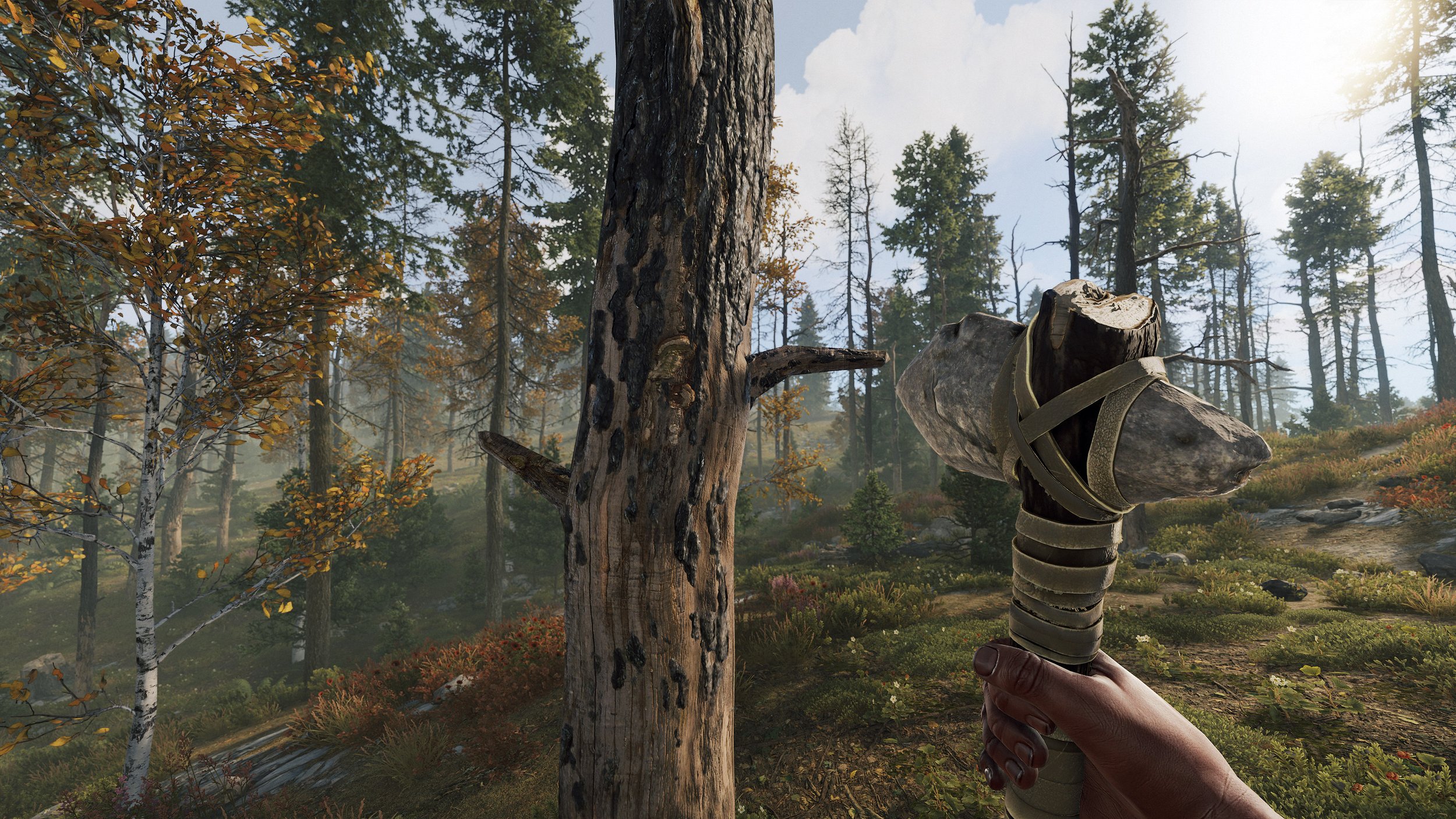
About Rust
Wipes, upkeep and blueprint knowledge decide how a session actually goes. Aim matters, but the player who brings the right materials home is the one still playing next week.
Read the server before you read the game
Rust is sold as a single game and plays very differently depending on where you log in. The official description sets the tone plainly: everything on the island, from wildlife to the environment to other survivors, is trying to end your run. What it does not advertise is how much a server's own rules change that.
Before joining, check the wipe announcements, the population and any group limits, and decide whether the server is the shape of game you want. A quiet server gives you room to practise, though fewer players does not mean a safer map. Modded servers can change upkeep, progression and raid rules outright, so advice written for vanilla Rust should be treated as advice for vanilla Rust only.
Wipes are the thing to understand properly, because they are two separate events. A map wipe resets the world and your structures. A blueprint wipe resets what you have learned to craft. Long-term planning on a server that is about to wipe blueprints is a different exercise from planning on one that only resets the map, so read both announcements rather than one.
The Tool Cupboard and the daily bill
Building in Rust comes with a maintenance cost. The Tool Cupboard, or TC, is placed inside your base and is crafted for 1,000 wood. Once it is locked it becomes the ledger for everything around it: its inventory shows the upkeep cost per 24 hours, the amount of protected time you have bought, and it pays those costs out of the materials stored inside it. Walls, foundations, ceilings, roofs, doors and window pieces all add to that bill while a Sleeping Bag does not, so expanding a base is a decision you make with the cupboard screen open.
Authorization is part of the same screen. You are authorized automatically when you place the cupboard, and teammates have to walk up and authorize themselves, which is the difference between a shared base and a base your friends cannot build in. Shared access also costs: the TC now applies an upkeep tax based on how many players are attached to the base. The first four count for nothing, the next six add two percent each, later players add four percent each, and the count includes cupboard authorization, code-lock access including guest codes, and anyone removed from either in the previous 24 hours. Server owners can tune or disable that scaling, which is another reason to read the server description.
Privilege has boundaries
Building privilege is projected by the foundations of the connected structure rather than by the cupboard's own position, so the shape of the base is the shape of the privilege. A workshop across the yard is a separate building and needs its own cupboard or a foundation connection, because being nearby is not enough on its own. Privilege is not a shield either: players without authorization can still place twig floors and wooden ladders, which is exactly how an approach to your roof begins.
The practical base for a first session is small and finished: one enclosed space, a working entrance you can practise walking through, a bag to respawn at and a cupboard supplied for the time you intend to be offline. A two-door entrance buys you a moment, not immunity, and the honest expectation is that any base can be taken by someone with enough patience and explosives.
Progression is a budget, not a ladder
Crafting runs through three workbench tiers, and each one costs more than the last. Level 1 asks for 500 wood and 100 metal fragments and can be built by hand. Level 2 needs 500 metal fragments, 20 high quality metal and five Basic Blueprint Fragments and must be crafted at a Level 1 bench. Level 3 needs 1,000 metal fragments, 100 high quality metal and five Advanced Blueprint Fragments at a Level 2 bench. The recipes themselves take wood, metal fragments and high quality metal rather than scrap; scrap is what you spend on learning recipes and on the tech tree.
Learning is its own set of choices. A blueprint teaches one recipe, a Research Table turns a found item into its blueprint for scrap, and the tech tree lets you buy a recipe you have never held. Knowing a recipe only helps if you can supply the materials to craft it again, which is the mistake that turns a good unlock into a permanent debt. Fragments come from monuments, locked crates and scientist loot, and extras can be converted upward at twenty Basic to one Advanced.
Should you play it
Yes, if you want the version of survival where you cannot read the threat. Rust's tension comes from not knowing what the noise outside your wall is — it might be another player deciding where to hit — and no amount of gear removes that. The monthly devblog rhythm means the game keeps moving as well, so last month's balance change is this month's habit.
Two things to weigh before you start. Expect to lose everything you own, repeatedly, and pick a server whose wipe schedule suits how often you can log in. And decide early whether you want the vanilla rules or a modified server, because switching later means relearning the rules that the guides you read were written for.
Go deeper with V4mp
- Developer
- Facepunch Studios
- Genre
- Survival
Explore Rust further
Explore the wiki for detailed reference pages on the game's world, systems, items and locations.