
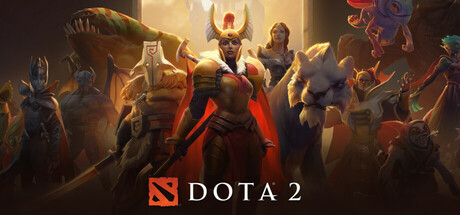
About Dota 2
The heroes and the match are free; what is sold alongside them is cosmetics, statistics and an assistant. What the game charges instead is attention, because the difference between a good first hundred games and a bad first hundred is where you spent your practice.
Free means the whole game
Dota 2 is free to play and all heroes are free, which makes it an oddity in a genre where roster unlocks are the usual paywall. Valve's own store description says it in three words, then leans into the scale: all heroes are free, there are over a hundred of them, and the update cycle keeps changing how they work. No hero and no item in the match sits behind a purchase: two teams of five, three lanes, and one objective, the enemy Ancient, which has to fall before yours does.
It runs on Windows, macOS and Linux. The useful starting point is practice rather than a queue: Demo Hero and bot matches let you fire abilities and practise last hitting with nothing on the line, which is exactly what a game with this much hidden information should offer. They also let you be bad in private rather than in front of four teammates, and that is the stronger argument for using them.
The systems that actually gate you
Dota's complexity is not in the ability descriptions. It is in the small rules that decide whether your gold and your cooldowns do anything. A purchase made at the home shop while you are out in lane does not appear in your inventory — it waits in your stash, and a courier is what carries it out to you. That turns delivery into part of the plan, and it makes courier timing something worth thinking about rather than a button you press and forget.
Teleporting has its own lesson. Valve's own item data for the Town Portal Scroll gives it a three-second channel and adds the line that teleports can be prevented or cancelled by Root abilities, so the scroll is a plan that needs a few uninterrupted seconds rather than a panic button. None of this is difficult once you have seen it, and all of it is invisible until the moment it costs you a fight.
Laning is a timing game, not a stat check
Lane creeps hand out two different rewards. Landing the killing blow on an enemy creep pays you gold; nearby allied heroes share experience when that creep dies regardless of who finished it. The two are separate, and confusing them is why new players end up under-levelled while feeling rich.
Denying is the other half: with the default bindings you press A and click an eligible low-health allied creep, and you have to land the killing blow for it to count. That is a timing skill worth practising on its own rather than while you are also trying to trade hits, and it is one of the reasons a shared lane works better when you agree early on who is taking the farm.
What Dota Plus adds
The optional subscription is Dota Plus, a monthly service with longer terms sold at a discount. It is progression and information rather than gameplay: hero levels earned by playing a hero, hero-specific challenges that pay experience for completing them with one, two or three stars in a win, and relics that track statistics through your matches. Reward Shards from those tracks buy Plus-exclusive cosmetics and some legacy item sets.
The Plus Assistant is the part that matters most to a learner. It suggests items according to your lane and the draft, recommends an ability at each level, and offers hero suggestions based on what both teams have picked, all drawn from recent matches at each skill bracket. There is also a death summary that breaks down the damage, stuns and disables that killed you. Weekly Battle Cups and bonus shards round out the package.
None of it makes you better on its own, and none of it is required. The assistant removes the guesswork of what to build and which ability to take, and it will not make you last-hit better or teach you where to stand. The free practice tools cover the part that matters most: actually throwing the spell until the timing is yours.
Should you play it
Yes, if you are willing to be bad at it for a while. Dota rewards patience in a specific way: the loss that teaches you why the courier died is worth more than the win where nothing was tested. Start with one hero, one lane habit and one item you understand, and let the rest arrive over weeks rather than evenings.
Two caveats worth taking seriously. There is no story mode and no progression that makes the match easier, so the motivation has to come from the game itself. And a bad game can be genuinely unpleasant, which is the strongest argument for starting in bot matches and Demo Hero instead of ranked play, where a mistake is a shared cost and everyone in the lobby can see it.
Go deeper with V4mp
- Developer
- Valve
- Genre
- MOBA
Explore Dota 2 further
Explore the wiki for detailed reference pages on the game's world, systems, items and locations.