
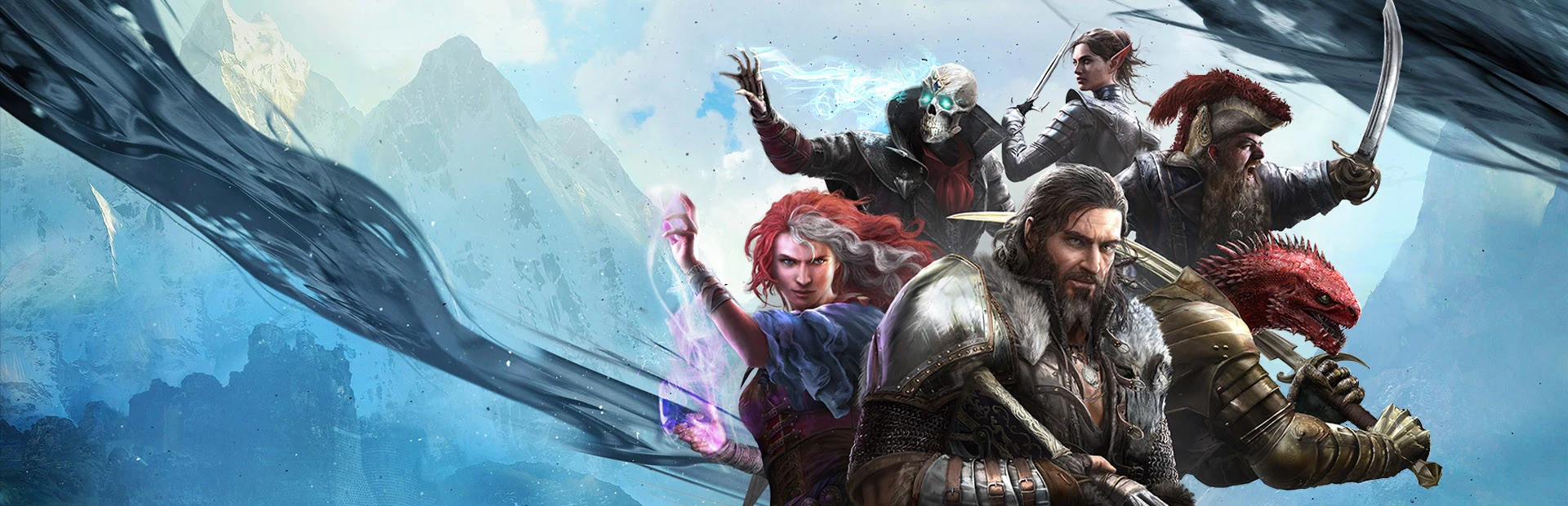
About Divinity: Original Sin 2
The versions sold today are the Definitive Edition and a short list of paid extras, so this review starts by separating the game from the add-ons around it.
What is in the box
The Definitive Edition is the game, and it is what you are buying when you buy Original Sin 2. Two paid extras sit beside it: Divine Ascension, a digital upgrade of lore books, artwork and a map of Reaper's Coast, and Sir Lora the Squirrel, a companion who joins you in Fort Joy with his undead cat mount. There is also a soundtrack sold on its own.
None of the extras is needed to play, but they are not all equivalent. Sir Lora is the one to look at twice when you are deciding, because he adds a quest and some skills content of his own rather than just art or audio; the rest is books, pictures and music.
The edition carries the features that give the game a life after the credits. Game Master mode, the level editor and Steam Workshop support are PC features, and they are what let players build and share their own campaigns. A console or iPad copy is the campaign and the co-op rather than the modding platform.
Who you are changes how the room treats you
You start with a choice the game keeps referring back to. Six written origin characters come with their own backgrounds and their own quests, and playing one of them puts you inside a story that already has a history and an ending it wants. The alternative is a blank slate: a Human, Lizard, Elf, Dwarf or Undead of your own making.
The world reacts differently depending on who, or what, you are. An elf can eat the flesh of the dead to read their memories. An undead walks around in a world that will happily kill them on sight. The two routes are genuinely different playthroughs rather than a difficulty setting in disguise, and neither is the lesser one: an origin brings a personal stake, while a custom character is yours to define.
Four chairs, one god
Up to four players can travel together online, and the co-op is drop-in, drop-out rather than a mode you commit to at the menu. Local split-screen is also available on supported versions; check that feature for your platform. The drop-in detail is what makes it work in practice: someone can leave and come back without the campaign becoming unusable.
The tension comes from the premise. The game is built around a party of up to four in which one character has the chance to become a god, so a co-op run has to carry four people's ambitions at once. That is a different arrangement from shared progression with a friendlier name.
Combat is an armour and surface argument
Fights are turn-based, and the systems underneath them are the real subject. Characters carry separate physical and magical armour, and many hostile status effects are blocked while their matching armour pool remains, so a fight is often about which pool you can strip first rather than which single attack hits hardest. Elements then combine on the ground: rain, fire, oil and poison leave surfaces that do not politely stay in the square they were cast on, and the field can be turned against whoever is standing in it.
Height is part of the toolkit rather than a blanket bonus: attacking from higher ground favours ranged attacks. More than two hundred skills across twelve skill schools give you the pieces to work with, so it helps to choose abilities that work with the rest of your party.
Preparation helps, but it is not a switch that turns a hard encounter easy. Positioning, the order you apply effects in, and where you leave your own party standing matter as much as the opening move.
You can kill almost anyone, and talk to the animals
Original Sin 2 lets you kill characters the plot would normally protect, and the campaign is built to route around a dead quest giver rather than break. That is broad rather than absolute: the story still branches around who is left alive and what you have already done, and some outcomes depend on the right person being present.
Talking to animals is the gentler half, and it comes with a condition. It is not a free ability for every character; it takes the Pet Pal talent, or an equivalent unlocked through the game's gift bags. With it, an ordinary walk through a market becomes a conversation you did not expect to have.
Should you play it
Yes, if you like role-playing games where the environment is a tool and the party is a set of relationships rather than a stat block. The origin system gives the campaign a spine, the combat turns the battlefield into a weapon, and the four-player online co-op makes disagreement part of the fun.
The friction is real, though. The difficulty punishes a party that has not thought about armour, positioning and surfaces, and a group that wants combat it can win by pressing buttons in the right order will have to change how it plays. Come in expecting a puzzle and it will keep giving.
Go deeper with V4mp
- Developer
- Larian Studios
- Genre
- RPG
Explore Divinity: Original Sin 2 further
Explore the wiki for detailed reference pages on the game's world, systems, items and locations.