
About Slay the Spire 2
It entered Early Access in the first half of 2026, so this is a review of a game that is still being built. Five characters, a mode for up to four players, and a patch cadence that can rewrite a card you just learned are all part of the deal.
What a run actually is
You climb a map. Each room is a normal fight, an Elite, a shop, a Rest Site, a treasure chest or a question mark, and the map draws the connections between them. Choosing which branch to commit to is the run's first real decision, and once you have taken a room you cannot step sideways onto an unrelated path. A question mark is a gamble rather than a shortcut: it can turn out to be an event, a fight, the Merchant or treasure.
Inside a fight you read the enemy's intent icons, count every hit in a repeated attack, and decide whether to spend Energy on damage or on Block. An enemy can show several icons together, so an attack often arrives alongside another effect, and some actions stay hidden behind a question mark until they resolve.
The two resources behave the way the genre has trained you to expect, with caveats. Block absorbs damage before HP and normally vanishes at the start of your next turn rather than carrying forward, and unspent Energy normally resets rather than banking, but cards and relics can change both. Read the card text before you build a plan around an exception.
Ascension is the difficulty ladder above the standard climb, and Ascension 10 is the top of it in Early Access. Enemy numbers shift at both ends of the curve as you climb, so a fight at high Ascension is a different problem rather than the same fight with a bigger health bar.
The characters are the difficulty setting
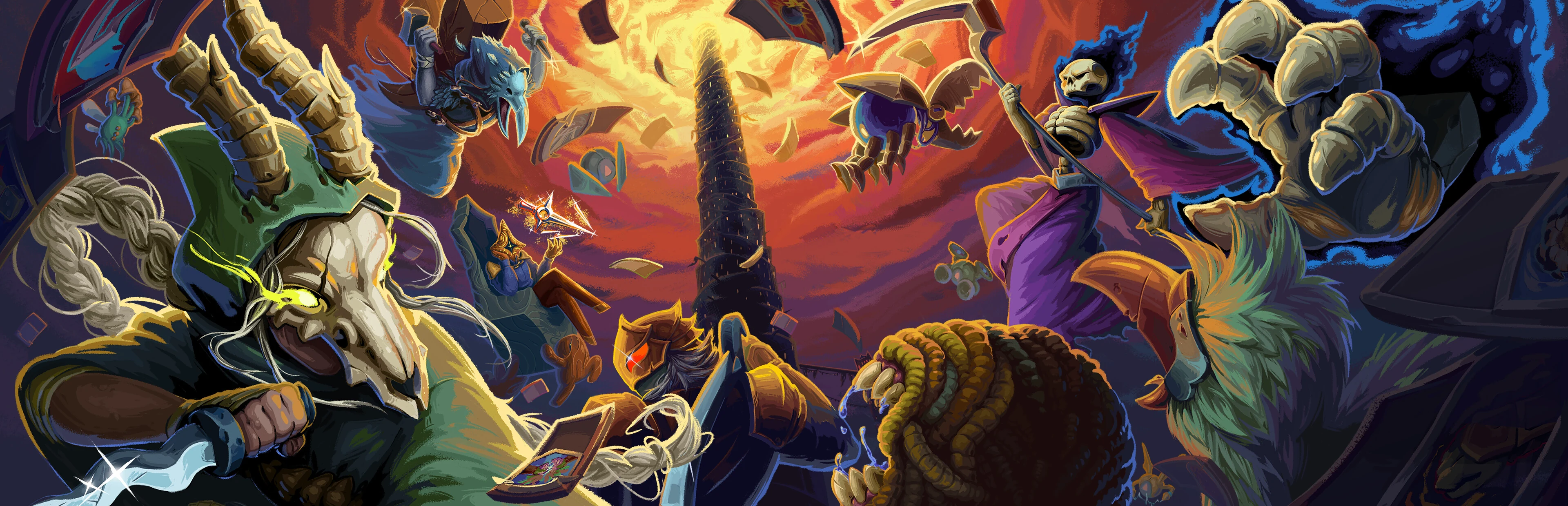
There are five characters, some returning from the first game and two brand new, and each one comes with its own cards and relics. The Ironclad's cards lean on Strength and Block, the Silent's on Weak and small precise attacks, the Defect's on Focus and orbs, the Necrobinder's on what it and its companion Osty do together, and the Regent's on a second resource: its cards can carry a Star cost alongside the Energy cost.
Enchantments are the addition that changes deckbuilding most, because they modify a card rather than adding one. The enchantment restrictions make choosing which card receives an effect part of the deck-building decision.
Co-op is the headline change
Up to four players can climb together, with cards and effects designed around teamwork. There are multiplayer-specific cards and team synergies, and some effects read the whole table rather than one player's board. The Colorless Gold Axe is the clean example: in multiplayer it deals damage equal to the number of cards played by all players, not just its owner's.
That turns "what does my hand do" into "what does our turn do", which is a different question. It also means the balance work is split, so the patch notes carry multiplayer-specific changes alongside the single-player ones. If co-op is your main mode, the multiplayer section of those notes is the one to read.
Early Access means the ground moves
A mid-2026 major update is a good illustration of what you are buying. It fixed a real seed-correlation problem: the game derives several random streams from one run seed, and those streams turned out to be related, so the curse from Neow's Bones could be predicted from which first act you rolled. That is corrected now, and it shipped alongside sweeping card reworks and relic changes.
Since then the additions have leaned towards infrastructure. Steam Workshop support, the first scaffolding of a Bestiary, a badge and score system, Traditional Chinese and Indonesian localisation and a steady stream of new cards and relics have shipped. An alternate Act 2, a new character and experimental game modes are still listed as in progress, and Steam achievements are planned for the 1.0 release. The update cadence has deliberately slowed to make room for the larger pieces, so the honest summary is longer waits between changes rather than shorter ones.
Should you play it
Yes, if you want a deckbuilder whose co-op mode changes the decisions rather than just the health bars. The five characters reshape how a run is planned, enchantments change what a card is for, and the co-op table gives you reasons to think about other people's hands.
What to weigh is the Early Access itself. Balance in a game like this is the content, and it is still being rewritten, so a strategy you refine this month can be reworked next month and any number that matters should be read as provisional. If you want a settled deckbuilder to learn once, waiting is reasonable. If you want to be in the room while one is still being figured out, this is a good room.
Go deeper with V4mp
- Developer
- Mega Crit
- Genre
- Roguelike deckbuilder
Explore Slay the Spire 2 further
Explore the wiki for detailed reference pages on the game's world, systems, items and locations.