
Plan Your Turn Before Spending Energy
On this page
Read the enemy row before spending Energy. In Slay the Spire 2, a turn is a chance to compare what your hand can do with what the enemies are about to do. Start with one ordinary single-player fight and take time to inspect the numbers.
Read every enemy’s intent
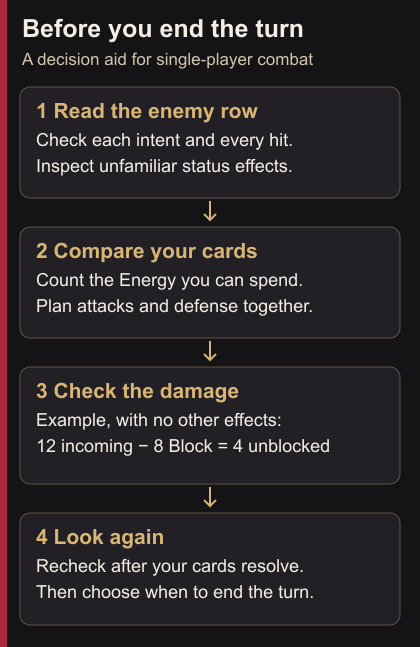
The icons above an enemy show its planned actions. An enemy can display several icons together, so an attack may come with another effect. Check every enemy, count every hit in a repeated attack, and inspect unfamiliar status effects. Some unusual actions remain hidden behind question marks. Untapped.gg’s intent guide
Look for an enemy you can defeat with the cards actually in your hand. Compare that sequence with blocking its attack, then check what the other enemies would still do. Avoid spreading attacks automatically: reducing one enemy’s HP may leave the same incoming damage, while defeating it can remove a threat. Read any death or retaliation effects before committing.
Budget the whole hand
By default, your turn starts with five cards drawn and three Energy, although cards and relics can change those amounts. Compare card costs with the Energy shown. Plan the cards together before paying for the first one. Community wiki: mechanics
If a draw card could change your options, consider it before spending the Energy needed to play whatever it draws. Drawing more cards does not make them affordable. Equally, avoid playing a card just because you can: its cost, drawback or effect may interfere with a better sequence.
Unused Energy normally resets at the start of the next turn. Do not save it expecting a larger allowance unless an effect explicitly carries it forward. Community wiki: Energy retention
Block the damage that matters
Block absorbs damage before HP and normally disappears at the start of your next turn. In a simple example with no other effects, 12 incoming damage against 8 Block leaves 4 damage unblocked. Extra Block is not healing, and it usually cannot be saved for a later attack. Community wiki: Block
Check the wording of cards that cost health. Direct HP loss can bypass Block, so a defensive total does not cancel every drawback. When enemies are preparing instead of attacking, weigh spending Energy on damage or a useful setup effect against any reason you still need defense.
Recheck before ending the turn
Ending your turn normally discards the cards left in your hand. Retain keeps a card through that discard. Exhaust sends a card to a separate pile; do not expect it to return through normal discard recycling. Special effects can change these rules. Community wiki: keywords
After a card resolves, look again at your hand, Energy, enemy HP and intents. Then end the turn when you have chosen which actions are worth taking. Use card reward decisions to address problems you noticed, and map routes and Rest Sites to prepare for the next stretch.