
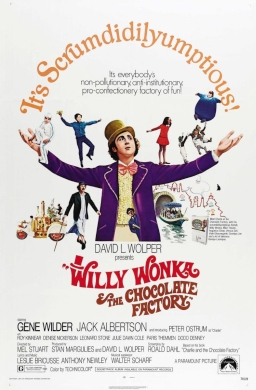
Behind the film
- Year
- 1971
- Director
- Mel Stuart
- Writers
- Roald Dahl, David Seltzer
- Runtime
- 1h 40m
- Genres
- Fantasy, Musical, Children's, Family
- Production
- Paramount Pictures, Warner Bros. Entertainment
- Country
- United Kingdom, United States
- Cast
- Gene Wilder, Jack Albertson, Peter Ostrum, Julie Dawn Cole, Denise Nickerson, Ed Peck, Günter Meisner, Roy Kinnear
About the film
Contains story spoilers.
Willy Wonka’s factory has been closed to visitors for years, and Charlie Bucket’s family hears competing stories about what happens inside. Grandpa Joe says Wonka shut the gates after rivals sent spies to steal his recipes; now the factory runs again, though no workers are seen coming or going. Wonka announces five Golden Tickets hidden in chocolate bars, each worth a tour and a lifetime of sweets. The contest becomes a public frenzy. Charlie watches from a poor household where a chocolate bar is a rare treat, so the prize is far beyond the other children’s ordinary indulgence.
Augustus Gloop, Veruca Salt, Violet Beauregarde and Mike Teavee claim the first four tickets. A false report from Paraguay appears to close the contest, but Charlie finds a coin and buys the bar containing the last ticket. Grandpa Joe leaves his bed to join him on the tour. Before they reach the factory, a man who has been seen near the other winners introduces himself as Slugworth and offers money for a sample of Wonka’s new Everlasting Gobstopper. Charlie now enters the tour with an offer to betray his host hanging over every dazzling room.
Wonka’s first appearance makes his behaviour hard to read: he limps toward the children, then turns the entrance into a sudden somersault. Inside, the Chocolate Room presents edible grass, a chocolate river and a waterfall, and Augustus ignores the warning to stay clear of the river. He is pulled into a pipe. Violet then takes experimental gum despite Wonka’s warning; after its meal-like flavours, the blueberry dessert swells her into a giant fruit. Each child’s trouble grows from something already established about them, while the Oompa-Loompas’ songs turn the exits into pointed commentary.
The tour’s temptations also test Charlie and Grandpa Joe: they secretly drink fizzy-lifting beverages, float toward a ceiling fan and escape by burping themselves back down. They rejoin the group as Wonka displays geese that lay golden eggs. Veruca demands a goose and steps onto the egg-testing device, which declares her a bad egg and sends her down a chute; her father follows. Mike later uses Wonka’s television-transmission equipment and is reduced to a tiny figure on a screen. Charlie has avoided their more conspicuous behaviour, but his own breach of the rules means his promised reward is no longer secure.
After the other visitors are gone, Wonka dismisses Charlie for breaking the rules and refuses the promised chocolate supply. Grandpa Joe urges him to sell the Gobstopper to Slugworth in revenge. Charlie instead hands it back to Wonka, who reveals that Slugworth is his employee Mr Wilkinson and that the offer was a test. Charlie has chosen honesty when the prize seemed lost, so Wonka names him the factory’s heir. The Wonkavator rises through the roof with Charlie, Grandpa Joe and Wonka inside, and the journey ends with the family invited to live at the factory.
The film reshapes Dahl’s book around Wonka and the question of whether Charlie can be trusted with the factory. The Gobstopper offer and the returning figure of Slugworth give the tour a thread of suspicion that is absent from a simple parade of strange rooms. That choice also changes the ending: Charlie’s return of the candy becomes evidence for Wonka’s decision, while his earlier rule-breaking prevents the test from being an easy reward for good behaviour. The child’s tour and the owner’s private examination happen at once, with Wonka controlling what the visitors can see and never explaining which parts of his welcome are sincere.
Gene Wilder wanted Wonka’s entrance to make his behaviour uncertain. The cane and false limp lead into a sudden somersault, establishing that the visitors cannot easily tell when he is being truthful or performing for them. That uncertainty grows during the tour. Wilder deliberately made his hair increasingly disordered as the film progressed, giving Wonka a less controlled appearance. Julie Dawn Cole remembered him as patient and generous with the child actors, speaking to them as adults. The boat scene still surprised them: she recalled not knowing what he would do when his performance became more alarming. The relationship between performer and children could be warm even while the character remained unpredictable.
The factory’s surroundings were chosen to feel like a storybook place rather than a familiar contemporary city. Munich provided streets that were less recognizable to British and American audiences, and a modified gasworks exterior became Wonka’s factory. Casting the children gave each part a different temperament: Julie Dawn Cole won Veruca after several auditions, while Peter Ostrum was found at the Cleveland Playhouse to provide Charlie’s quieter centre. Inside the factory, the Oompa-Loompas act as a chorus, responding in song to the visitors’ behaviour after their departures. Their recurring numbers give the tour a rhythm of temptation, consequence and commentary. Charlie’s family scenes establish a gentler emotional setting outside that repeated pattern, making his final return of the Gobstopper a personal decision as well as the last stage of Wonka’s test.