
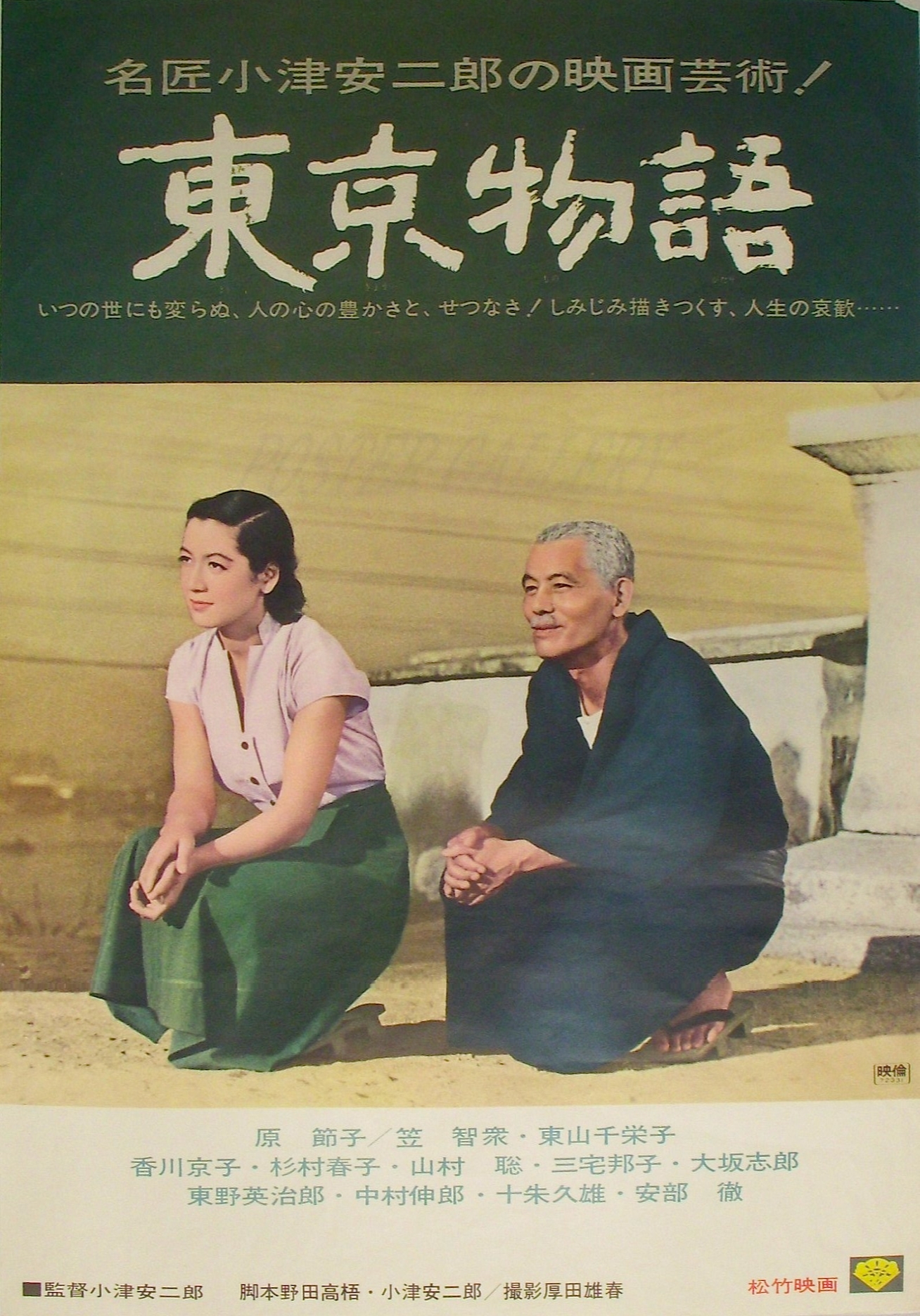
Behind the film
- Year
- 1953
- Director
- Yasujirō Ozu
- Writers
- Kōgo Noda, Yasujirō Ozu
- Runtime
- 2h 16m
- Genres
- Drama
- Production
- Shochiku
- Country
- Japan
- Cast
- Chishu Ryu, Chieko Higashiyama, Setsuko Hara, Haruko Sugimura, So Yamamura, Kyoko Kagawa
About the film
Contains story spoilers.
Yasujiro Ozu’s Tokyo Story begins with an ordinary family plan: Shukichi and Tomi Hirayama leave their seaside home in Onomichi to visit their adult children in Tokyo. Their youngest daughter Kyoko remains at home, while the parents travel to see their married son Koichi and daughter Shige. The visit becomes a quiet measure of how much the family has changed since the children left. Koichi is a doctor with a small practice, and Shige runs a beauty salon; both have work and household responsibilities that crowd out the time their parents hoped to spend together. Ozu keeps the setting domestic, following people through rooms, meals, errands and conversations rather than building toward a single dramatic confrontation.
The first disappointment is not an argument but a series of practical arrangements. Shige and Koichi cannot easily host their parents, so they arrange for the older couple to stay at a hot-spring resort. The trip gives the parents a change of scenery, yet it is also a way for the children to move them out of the house while they continue their routines. At night, the resort’s younger guests make noise and keep Shukichi and Tomi awake. The couple returns to Tokyo earlier than planned. Their discomfort is visible in small exchanges and pauses; no one openly announces that the visit has failed, but the children’s schedules keep reminding them that they are guests being accommodated rather than family being welcomed.
Noriko, the widow of the Hirayamas’ son Shoji, is the exception. She lives alone in Tokyo and works in an office, but she takes time off to show Shukichi and Tomi around the city. Her kindness is not based on an obligation to her in-laws in the same way as Koichi and Shige’s duties; she chooses to make space for them. The sightseeing trip offers the older couple a look at the rebuilt capital, while Noriko’s modest apartment also gives them a glimpse of the life she has made after Shoji’s death in the war. During their Tokyo visit, Tomi urges Noriko to marry again before the couple leaves the city. Noriko’s answer reveals that she is less settled and cheerful than her hospitality might suggest.
Ozu does not make the adult children simple villains. Koichi’s clinic and Shige’s salon occupy much of their days, and their own households have limited space and money. They show care in gestures but also become impatient, especially when their father drinks too much with old friends and Shige has to deal with him. Their failure to host their parents warmly grows from familiar pressures and from a selfishness they do not quite recognize. This is clearest when they send Shukichi and Tomi away to the resort, and later when Shige worries about the cost of gifts and lodging. The film lets these contradictions remain in view: the children can be busy and concerned while still treating their parents as an interruption.
On the return journey, Tomi falls ill, and the family receives word that her condition is worsening. Koichi, Shige and Noriko travel to Onomichi, where the children arrive too late to change what is happening. Tomi dies, and the family gathers for her funeral. The scenes after her death shift the weight from the parents’ visit to Shukichi’s future without her. Shige leaves quickly to return to Tokyo, while Noriko stays behind a little longer. Kyoko tells Noriko that she is angry at how quickly Koichi and Shige have resumed their routines. Noriko listens and acknowledges the limits of her own life in the city; she has been attentive to Shukichi and Tomi, but her bond with Shoji still leaves her alone. Shukichi gives her Tomi’s watch, a small keepsake that carries the family’s loss into the life she must return to.
Before Noriko leaves, she and Shukichi speak privately about her future. She admits that she sometimes goes through a day without thinking of Shoji and worries about spending the rest of her life alone. Shukichi does not demand that she preserve his son’s memory through permanent mourning. He urges her to marry again, recognizing the care she has shown him and Tomi while their own children were busy elsewhere. The watch she carries home belongs to that exchange between them. Noriko boards the train for Tokyo, and Shukichi remains in Onomichi with Kyoko. The film eventually leaves him sitting alone, facing a household that will continue without his wife.
Ozu gives these conversations a deliberately steady visual setting. The camera usually sits low and holds its position as people speak, with the lines of doors, screens and furniture organizing the rooms around them. Cuts between speaking characters let each person finish a thought without turning the exchange into a confrontation. Occasional movement, including the sightseeing bus, stands out against those fixed views. Empty spaces, trains and the waterfront connect scenes while preserving a sense of the places the family inhabits. The final separation is carried by familiar sounds and objects as well as faces: a departing train, Tomi’s wristwatch and a boat heard near the home Shukichi has returned to.
The smaller incidents prevent the family from dividing neatly into kind and cruel people. Koichi cancels a promised outing because a patient needs him, leaving his own son disappointed as well as his visiting parents. Shige objects to expensive cakes bought for the older couple, yet later arrives prepared for the funeral while Noriko has not thought to bring mourning clothes. Shukichi’s drinking recalls difficulties that existed before this visit. These details give the estrangement a history beyond the few days shown. Chishu Ryu and Chieko Higashiyama play the parents, with Setsuko Hara as Noriko; her character shares a name with Hara’s roles in Late Spring and Early Summer, though each film tells a separate story.