
Behind the film
- Year
- 2004
- Director
- Jonathan Hensleigh
- Writers
- Michael France, Jonathan Hensleigh, Gerry Conway, Ross Andru, John Romita Sr.
- Genres
- Action, Thriller, Crime, Drama
- Production
- Starz Entertainment, Artisan Entertainment, Marvel Entertainment
- Country
- United States
- Cast
- Thomas Jane, John Travolta, Will Patton, Roy Scheider, Laura Harring, Ben Foster, Rebecca Romijn, Samantha Mathis
About the film
Contains story spoilers.
Frank Castle's last undercover FBI operation leaves crime boss Howard Saint's son dead. Saint orders revenge, and his wife Livia demands the death of Castle's family. Castle survives the attack in Puerto Rico and returns to Tampa, where Joan, Bumpo and Dave become his neighbours. With inside help from Mickey Duka, he attacks Saint's business and survives hired assassins. Castle then convinces Saint that Livia and Quentin Glass are lovers; Saint kills them both. Castle destroys the remaining organisation and kills Saint, revealing the deception before his death. Afterwards, Castle considers suicide but chooses to keep fighting crime. He leaves money for the neighbours who protected him and stands on the Sunshine Skyway Bridge, declaring his identity as the Punisher.
Jonathan Hensleigh drew on two comic stories for Castle. He told Wizard that he took pieces from The Punisher: Year One because its full plot was too involved for the film he was making. Garth Ennis's Welcome Back, Frank supplied the tenement, Joan, Bumpo, Dave and the Russian. Hensleigh also wanted its droll, irreverent humour alongside the danger. His adaptation avoided Microchip and the battle van, which he felt took the character too far towards high technology. He described an urban vigilante whose cunning mattered as much as physical force. Castle's manipulation of Howard Saint was central to that approach: Hensleigh said the plan would develop across the second and third acts, with their face-to-face confrontation held until the end.
Thomas Jane approached Castle as someone without supernatural abilities, depending on his wits and what he could learn. In an AboutFilm interview, he connected his interest in the role to the films of Don Siegel, Sam Peckinpah and Sergio Leone that he had watched with his father. He saw the tenement neighbours as a way back towards family and human relationships for a man whose earlier capacity for love had been damaged by loss. Jane also thought playing Castle and Saint seriously would allow their larger-than-life situations to work. In a separate interview, he described the practical effect of that thinking on his performance. While working through scenes with Hensleigh, he removed dialogue whenever a look or gesture could communicate the same thing. Frank's physical presence became his main way of expressing the character. Jane spent about six months preparing his body for the part, despite disliking the bodybuilding involved. He said that conditioning helped him endure the demanding fight with the Russian. His interest in continuing the role also depended on exploring Castle's personal boundary between right and wrong.
Producer Gale Anne Hurd described an action film made within Artisan's smaller financial scale. She put its budget below $40 million and said John Travolta's part involved about four weeks of work, with his pay calculated in proportion to that commitment. Hurd also described why she believed Hensleigh was ready for his first feature as director. Having produced films he had written, she had seen him working on sets, answering actors' questions and helping resolve production problems. She credited his ability to communicate with performers and crew, as well as his familiarity with the practical demands of filming. Her account placed his directing preparation in those daily working relationships, rather than in screenwriting alone.
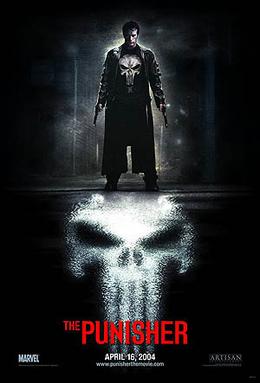
Tampa was a point of disagreement for Jane. Looking back in an Entertainment Tonight interview, he recalled the crew trying to make the city appear menacing, while saying that Florida had never felt like the best setting for his version of the character. He brought Tim Bradstreet's dark comic covers into production meetings as visual references and pushed for a more realistic appearance. Jane nevertheless singled out the opera-backed fight with the Russian as an experiment he enjoyed making. Castle's clothing allowed a more openly comic-book detail. Costume designer Lisa Tomczeszyn created his skull T-shirt; Hensleigh described its heightened design as deliberate, while the other characters' clothes needed to feel grounded in reality.
Hensleigh described the treatment of Dave as a difficult choice. He wanted the scene to establish the antagonists' cruelty and show how much Dave had sacrificed by protecting Castle. The director said he tried to keep the audience away from lingering anatomical spectacle, while keeping the danger disturbing. For him, holding a consistent tone meant deciding what each violent moment was doing for the characters.
Composer Carlo Siliotto understood Castle through grief. He described the film as a modern tragedy, with something of Othello in its emotional conflicts. Hensleigh had heard his earlier music and wanted Siliotto's own musical voice, giving him room to follow the characters' feelings. For the attack on the family, Siliotto said he kept Maria's perspective and Frank's coming pain in mind, building a musical memory of them before the loss. The main theme needed enough flexibility to follow Castle's strength and sadness. Another recurring pattern let the music build and then pause just before an event; Siliotto credited music editor Phillip Tallman's close reading of the film with helping that approach. Creating the score also involved developing electronic sounds that could work with an orchestra. Siliotto reported about fifteen days on the electronic recordings before five days of orchestral sessions. The electronic portion was recorded in Rome, the orchestra in Bulgaria, and the music was mixed back in Rome. He conducted the orchestral work himself, with an assistant listening from the control room.