
Behind the film
- Year
- 1984
- Director
- Roland Joffé
- Writers
- Bruce Robinson
- Genres
- Biographical, Drama
- Production
- Enigma Productions, Warner Bros. Entertainment, International Film Investors
- Country
- United Kingdom
- Cast
- Sam Waterston, John Malkovich, Haing S. Ngor, Julian Sands, Craig T. Nelson, Spalding Gray, Athol Fugard, Bill Paterson
About the film
Contains story spoilers.
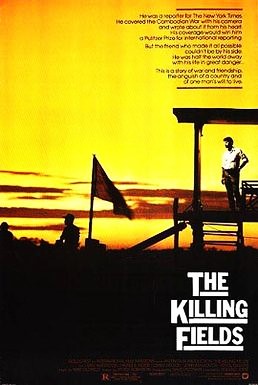
The Killing Fields centres on two journalists whose names belong to the same story but whose positions inside it become very different. Sam Waterston plays Sydney Schanberg, Haing S. Ngor plays Dith Pran, and John Malkovich and Julian Sands play fellow reporters Al Rockoff and Jon Swain. Roland Joffé directs the 1984 film, with a screenplay by Bruce Robinson adapted from Schanberg's account. Chris Menges photographs the drama and Jim Clark edits it. The ensemble places Pran and Schanberg among people whose work requires them to remain close to danger.
The film begins its reporting story in Cambodia in 1973. Schanberg and Pran investigate a bombing at Neak Leung, with Pran supplying knowledge and access that the American needs. By 1975, the approaching Khmer Rouge has changed the question from how to report the war to whether anyone can safely remain. Schanberg helps evacuate Pran's family, while Pran stays. After the takeover, it is Pran who negotiates the release of his foreign colleagues when they face execution. Shelter at the French embassy does not extend equal protection to everyone inside it. The Khmer Rouge demands that Cambodians leave, and Rockoff and Swain try to create a passport that might let Pran pass as a foreigner. Their attempt depends on making a usable photograph. When it fails, Pran cannot leave with his friends. The people he has helped to save have reached a boundary beyond which their status no longer helps him.
The opening narration introduces Cambodia through Schanberg's account of finding a guide, interpreter and friend there. A radio report about Watergate places events in America on the soundtrack alongside the Cambodian setting. Those voices establish the foreign correspondent's world before the story moves into an experience he cannot accompany. Following the separation, Pran's survival occupies the film directly. The labour camps require him to endure hunger and danger while concealing what he knows. His attempts to escape lead him through a landscape where the remains of murdered people make the title brutally concrete. This part of the drama gives the man initially introduced through another journalist's memory a journey of his own. Schanberg can describe a colleague and search for him from abroad, but he cannot make those decisions for Pran or share the risks of being recognised inside the camp.
Back in the United States, recognition for Schanberg's reporting sits beside his grief and guilt about Pran. The award cannot tell him whether his friend is alive. Pran's eventual escape involves another obligation when he travels with the young son of a camp leader. A land mine kills the child and the companion carrying him, leaving Pran to continue alone. Reaching a Red Cross camp finally allows news of his survival to get through. When Schanberg arrives for their reunion, the conversation is about forgiveness rather than journalism. Pran's answer makes room for their friendship again, without making the preceding loss disappear. The ending brings the two men together after the story has spent so long showing how unequal their separation was. One has been able to search through letters and contacts; the other has had to cross the dangerous ground himself.
Joffé's preparation treated the material as a difficult human story rather than an occasion to supply a single political slogan. In his BOMB interview, he remembers reading the early script after David Puttnam asked for his opinion. He wrote a response before expecting to be offered the directing job, and Puttnam later returned to that letter when explaining his choice. Interviewer Tom Bird, who appeared in the film, also recalls the actors reading William Shawcross's Sideshow, watching documentaries and working alongside Cambodian performers. Discussing his approach to the characters, Joffé says he wanted their different voices to have room and wanted audiences to make connections and judgements through feeling. That is a useful description of the tension inside Schanberg's role. His dedication to the story and his affection for Pran remain present even when the consequences of his decisions become painful. The film can hold those motives together without making professional commitment an automatic excuse for what another person suffers.
Menges's moving camera helps make the journalists part of an occupied place rather than observers safely outside it. The scenes use tracking and panning movements to keep people and their surroundings in the same developing space. An embassy packed with refugees has a different pressure from a devastated street, but both can turn threatening while the characters remain in view. Joffé also chose to leave the foreign-language dialogue without subtitles, an approach he explained as part of making the world unpredictable even to those living inside it. Pran cannot count on a transparent explanation of why he is spared or threatened. Ngor brought a separate personal history to that role: he had survived the Khmer Rouge and escaped Cambodia before becoming an actor. His experience was his own, rather than identical to Pran's, but it gave the performance an unusually close relationship with the suffering being dramatized. The film's account is shaped around these particular people and their friendship, with the wider catastrophe pressing into the places they inhabit.