
Behind the film
- Year
- 2014
- Director
- David Dobkin
- Writers
- David Dobkin, Nick Schenk
- Genres
- Comedy drama, Trial, Drama, Crime
- Production
- Warner Bros. Entertainment, Team Downey, Big Kid Pictures
- Country
- United States
- Cast
- Balthazar Getty, Billy Bob Thornton, David Krumholtz, Dax Shepard, Eric West, Grace Zabriskie, Ian Nelson, Ken Howard
About the film
Contains story spoilers, including the ending.
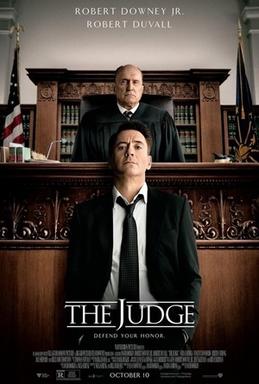
Hank Palmer can control a courtroom much more easily than a family conversation. Robert Downey Jr. plays the Chicago defence lawyer whose expensive professional life has given him little preparation for returning to Carlinville after his mother's death. Robert Duvall plays Joseph Palmer, the father Hank still addresses as Judge. Their estrangement makes the funeral an obligation Hank wants to finish quickly, but a criminal investigation prevents that departure. Around them are the brothers who stayed: Glen, played by Vincent D'Onofrio, and Dale, played by Jeremy Strong. Glen runs a tyre business after losing his chance at a baseball career; Dale records family life with a Super 8 camera. Vera Farmiga's Samantha is another person Hank left behind. David Dobkin's 2014 film brings these relationships into the same small town, where Hank's status elsewhere earns him little affection at home.
The case begins with damage to Joseph's car and the death of Mark Blackwell, a former prisoner with a history in his courtroom. Blood on the vehicle connects Joseph to the fatal collision, while his previous dealings with Blackwell make intent a central issue. Joseph initially chooses a local lawyer rather than accept Hank's help. When Hank takes over, he discovers that his father has been undergoing treatment for terminal cancer and experiencing problems with memory. The information could help the defence, but Joseph fears what acknowledging it might mean for the decisions he has made from the bench. Hank therefore has a client who resists the strategy designed to protect him. Their old disagreement over control becomes a practical problem: the son wants to win, while the father wants to preserve the integrity of his working life.
Joseph is acquitted of first-degree murder but convicted of voluntary manslaughter. He later receives compassionate release, with prosecutor Dwight Dickham supporting the request. The trial cannot restore everything the Palmers have lost. Joseph's severe treatment of Hank grew partly from the accident that ended Glen's sporting prospects, leaving the son to seek approval through a career far from home. Defending Joseph forces Hank to reconsider that history and the father's attachment to responsibility. The final movement brings them to a fishing boat, where their relationship has softened before Joseph dies. Hank subsequently returns to the courthouse and spins the empty chair his father occupied. It stops facing him. That image leaves Hank confronting the professional and personal inheritance represented by the room, without showing him taking his father's position.
Carlinville's appearance was part of Dobkin's account of the family. He wanted a town attractive enough to make Hank's departure seem puzzling before the reasons for his estrangement became clear. The production found that setting in Shelburne Falls, Massachusetts, after considering other states. Dobkin described an emotional response to the place and the sense that it was somewhere worth defending, connecting its appearance to Joseph's loyalty to his community. Most of the film was made in Massachusetts, with the Norfolk County Courthouse in Dedham among the principal locations. A second unit photographed Indiana farmland and silos from the air. The result combines a fictional Indiana home with buildings and streets found elsewhere, giving the family conflict a specific surrounding world without requiring the principal cast to film every exterior in the state where the story takes place.
Dobkin and cinematographer Janusz Kaminski also divided that world through colour and camera movement. Chicago has a colder palette of glass and metal; the house is warmer, the outdoor greens more alive, and the courtroom more controlled and monochromatic. Red was largely held back so that its appearance could become more noticeable. Handheld camerawork arrives at selected moments of personal confrontation, including the later courtroom approach between Hank and his father. Dobkin wanted the images to follow Hank's perception, using layers of light, flares, changes of focus and longer lenses to connect or obscure people within a frame. In one roadside argument, father and son walk in opposite directions while a brother remains between them in the car. The arrangement makes another family member's position inside their conflict visible without requiring him to explain it.
That movement towards family drama also drew on Dobkin's experience of having a lawyer for a father. He remembered being questioned at home when he tried to avoid telling the whole truth, and brought that connection between parental authority and legal examination into the story. Joseph's courtroom consequently represents a place of deeply held principles for him, even when those principles make the defence harder. Thomas Newman's score contributes another link: horns accompany the courthouse and return when Joseph speaks about honour and legacy. Hank's outward transformation is more everyday. He exchanges the polished appearance of his Chicago life for his old bedroom, casual clothes and a bicycle. The cycling came from Downey's own childhood memory, allowing the character's return to youth to emerge through an action as well as through the arguments over his past.