
Behind the film
- Year
- 2011
- Director
- George Clooney
- Writers
- George Clooney, Grant Heslov, Beau Willimon
- Genres
- Drama, Political thriller
- Production
- Smokehouse Pictures, Appian Way Productions, Exclusive Media
- Country
- United States
- Cast
- Ryan Gosling, George Clooney, Philip Seymour Hoffman, Paul Giamatti, Marisa Tomei, Evan Rachel Wood
About the film
Contains story spoilers, including the ending.
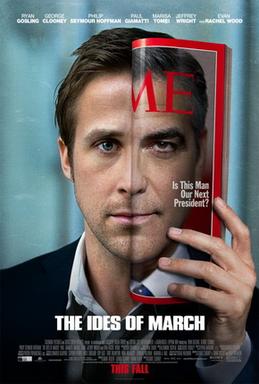
The Ides of March follows the people preparing a presidential candidate for the public. Ryan Gosling plays Stephen Meyers, a press secretary working for Governor Mike Morris, played by George Clooney. Philip Seymour Hoffman plays campaign manager Paul Zara, Paul Giamatti plays rival strategist Tom Duffy, and Marisa Tomei plays reporter Ida Horowicz. Clooney directed the 2011 film, writing its screenplay with Grant Heslov and Beau Willimon from Willimon's play Farragut North. Stephen's faith in Morris makes an Ohio primary feel like a chance to put a worthwhile leader in office. A scandal forces him to choose how far he will go to keep the campaign alive.
Duffy offers Stephen a position on Ted Pullman's rival campaign and claims Senator Thompson's endorsement has already been secured by the promise of a cabinet post. Stephen takes the meeting, then tells Paul about it. What he considers useful intelligence becomes evidence of disloyalty. Meanwhile, his relationship with campaign intern Molly Stearns reveals a secret closer to Morris: she is pregnant after an encounter with the governor. Stephen arranges money for an abortion and tells her to leave the campaign. Ida's knowledge of the Duffy meeting threatens Stephen's job, and Paul admits leaking the story before dismissing him. Duffy refuses to take him on after all. Stephen has lost his position while holding information that could ruin Morris. Molly, afraid her involvement will become public after Stephen's dismissal, dies by suicide. Her death leaves the campaign's private dealings with a consequence that no change of staff can undo.
Stephen confronts Morris in a restaurant kitchen and demands Paul's job. He claims Molly left a note naming the governor, turning knowledge of her pregnancy and death into leverage. Morris questions what Stephen can actually prove, while Stephen insists that his presence at the meeting already shows how seriously the governor takes the threat. The bargain places the man who had been dismissed for disloyalty at the head of the campaign. Stephen makes the case through Morris's desire to win, using the scandal to obtain the authority that Paul has taken from him. The confrontation brings candidate and strategist into direct negotiation, away from speeches and appearances prepared for voters. Morris replaces Paul with Stephen and secures Thompson's endorsement by offering him the vice-presidential place. The closing television interview follows Morris speaking about integrity. Stephen sits ready to answer questions; the film ends before revealing what he will say. Clooney described the ambiguity as an invitation to discussion, leaving the characters' choices open to argument after the film.
Bringing Morris onto the screen changed the balance of the adaptation. Willimon explained that the governor never appears in Farragut North, which stays behind the scenes. The film gave the writers a chance to add characters and expand the story beyond those rooms. Willimon linked that expansion to the different pace of cinema: a long conversation could hold a theatre audience, while film demanded more action and a faster movement through events. Putting the governor inside the drama allowed the stakes to become a matter of life and death. The campaign managers' speeches about loyalty and political careers did survive from the play almost intact. Paul and Duffy therefore retain their competing lessons for Stephen while Morris becomes someone he can face directly. Willimon described the screenplay as a more detailed exercise in plotting, with more characters and scenes to arrange around the core he already knew.
The campaign setting drew on Willimon's own work at events and on access to people nearer the centre of political operations. He described doing advance work, arranging the practical details of a candidate's visit rather than holding the kind of authority Stephen possesses. A friend in senior press roles supplied another view of the work. Willimon saw the play and film as bringing those experiences together, connecting people at the edges of the campaign with the circle making its decisions. After writing several screenplay drafts, he handed the material to Clooney and Heslov, who made extensive changes. He identified the ethical fork in Stephen's life as the part they kept. In his account, Stephen's choice turns him into a monster. That description belongs to the writer's view of the character's transformation; the final interview still withholds Stephen's next public act.
Cinematographer Phedon Papamichael worked with Clooney towards the look of political thrillers from the 1970s. He named Three Days of the Condor, The Candidate and The Godfather Part II among the references. Production designer Sharon Seymour used muted environments and clothing, with saturated red and blue remaining as the colours of the campaign. Papamichael also described a straightforward approach to staging and coverage, influenced by his work with Alexander Payne. Fewer takes could keep actors fresh and avoid extending the working day. The film uses a wide 2.40:1 frame and was photographed on Super 35 film. Large, soft light sources and bounced light were central to the interiors. Papamichael and his collaborators adjusted reflected light around performers, sometimes bringing it up from below towards their eyes. Those choices give the campaign's public colours a place within rooms where the important conversations happen between a small number of people.