
Behind the film
- Year
- 1940
- Director
- John Ford
- Writers
- Nunnally Johnson, John Steinbeck
- Runtime
- 2h 8m
- Genres
- Drama
- Production
- 20th Century Studios
- Country
- United States
- Cast
- Henry Fonda, Jane Darwell, John Carradine, Shirley Mills, John Qualen, Eddie Quillan, Charley Grapewin, Russell Simpson
About the film
Contains story spoilers.
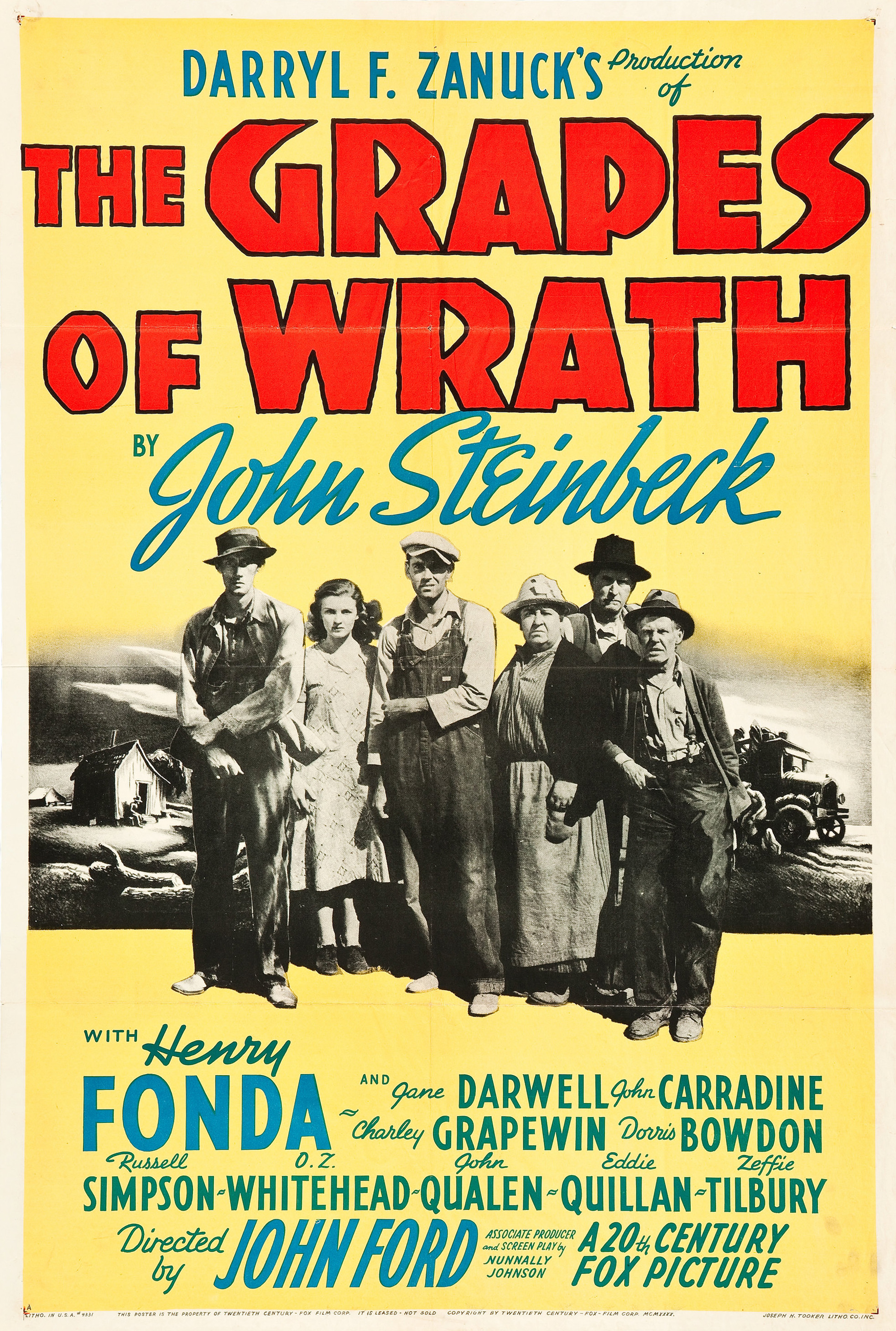
John Ford’s The Grapes of Wrath follows the Joad family from an abandoned Oklahoma farm to the roads and migrant camps of California during the Great Depression. Tom Joad, played by Henry Fonda, returns home after serving time for killing a man in a fight and finds the house empty. The land has been taken from the tenant farmers, and Tom learns from his neighbor Muley that machinery and the power of the land companies have pushed families out. The film begins with one man trying to get home, then widens into a journey shaped by the same economic forces that have uprooted thousands of others.
Tom reunites with Ma, Pa and the rest of the family at his uncle’s place, where they are preparing to leave for California. They have heard that fruit farms need workers and hope the wages will let them start again. Their possessions are squeezed into a battered truck, and each person carries a different expectation of what the destination might bring. Ma holds the family together through practical decisions and steady resolve. Pa tries to keep his place as head of the household while the ground beneath that role keeps shifting. Tom, recently released and still under parole, has to decide what responsibility means when the family can no longer remain rooted in one place.
Jim Casy, a former preacher who has lost his faith in the pulpit, joins the journey. His questions about sin, hunger and the shared life of ordinary people gradually give Tom a wider view of the hardships around them. The road is not a simple passage from poverty to opportunity. The Joads encounter other families moving in the same direction, rumors about jobs and the daily costs of fuel and food. Grandpa dies early in the trip, and Grandma later dies as they cross the desert. These losses change the family’s shape before they have even reached the place they imagined as a refuge.
California is less welcoming than the handbills promised. At the border, officials question the travelers, while camps and roadside stops are crowded with migrants searching for work. The wages offered for fruit picking are low, and the number of workers makes it easy for employers to set families against one another. When Casy becomes involved in organizing workers against a cut in pay, the conflict turns violent. Tom sees him killed by a guard and strikes back, killing the guard. Now a fugitive again, Tom must choose between staying with his family and exposing them to danger.
The film treats the Joads’ changing relationships as closely as the larger struggle for work. Rosasharn is pregnant and travels with her husband Connie, who imagines he can escape the hardship by leaving for a better opportunity. When he disappears, her future becomes more uncertain. Al, the younger brother, is making plans of his own. Pa’s authority weakens as decisions are forced on him, while Ma becomes the family’s center of gravity. The truck keeps carrying them forward, but the family cannot simply preserve the life it had in Oklahoma; survival means repeatedly deciding who can stay together and what they can afford to leave behind.
One of the few places where the migrants are treated with care is a government-run camp. There the Joads find clean facilities, elected camp representatives and some protection from harassment. The order feels startling after the suspicion and exploitation they have faced elsewhere. But it is temporary. The family must leave when work becomes available near Fresno, and Tom cannot safely remain with them. After Tom kills the man who killed Casy, police track him down at the camp. He must leave rather than endanger the family, parting from Ma with a promise to carry Casy’s sense of collective responsibility beyond the Joads. The choice is painful because his concern has grown beyond his own household even as it takes him away from it.
Tom’s departure leaves Ma to lead the family onward. In the final scenes, she tells Pa that the poor keep surviving even as powerful people and institutions come and go. The ending gives the Joads a measure of resolve, though it does not promise steady work, a home or an easy future. That note of endurance differs from the novel’s final episode, and the film makes its last emphasis the family’s ability to keep moving. Ma’s conviction does not erase what the journey has cost them; it is the resource she can offer when certainty has run out.
The journey also changes the meaning of home. At first the family’s farm seems like the place they have lost, but the trip reveals that a home can also be a group of people trying to remain responsible to one another. That idea is tested by every death, departure and job that draws them onward. Ma understands that keeping the family together cannot mean forcing everyone to stay in one truck forever. Her strength lies in adjusting without surrendering the sense that they belong to one another, even when Tom must leave and the road has no settled end.