
Behind the film
- Year
- 1999
- Director
- Eduardo Sánchez, Daniel Myrick
- Writers
- Daniel Myrick, Eduardo Sánchez
- Runtime
- 1h 21m
- Genres
- Horror, Psychological horror fiction, Found footage, Mystery
- Production
- Haxan Films
- Country
- United States
- Cast
- Rei Hance, Michael C. Williams, Joshua Leonard, Jim King
About the film
Contains story spoilers.
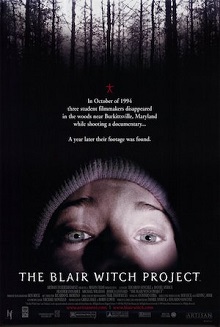
The Blair Witch Project follows film students Heather Donahue, Joshua Leonard and Michael C. Williams as they head to Burkittsville, Maryland, to make a documentary about a local witch legend. Heather directs and conducts interviews, Josh operates the camera, and Mike records sound. The film presents their material as recovered recordings from a missing-person case, so every scene belongs to the equipment the three carry: video footage, film, and the sounds caught while they are trying to work. There is no outside narrator to explain what the images mean, and the film never confirms that the witch exists.
Before they enter the forest, the students gather fragments of local history from residents. The accounts include Elly Kedward, an alleged witch driven from the settlement in the eighteenth century, and Rustin Parr, a man said to have murdered children in the 1940s while claiming that a witch directed him. These stories do not form a single dependable account. Some people recount them with conviction, others treat the project as a joke, and the students approach the interviews as material for a documentary. Their curiosity is practical: they want striking footage and a clear narrative. That confidence gives way once they leave town and the stories stop feeling safely contained in an interview.
Heather has planned the trip and takes responsibility for keeping the project moving, while Josh is more relaxed about the work and Mike handles the separate sound equipment. They set out with a map and compass, expecting to hike to locations connected with the legend and return to their car. The forest gradually defeats that straightforward plan. Their route becomes hard to reconstruct, and the group starts arguing about where they are and who has made the wrong decision. Because the camera remains with them, the audience sees frustration and uncertainty as part of the expedition rather than receiving a clean, later explanation of the geography.
The trouble first arrives as small changes around the campsites: piles of stones, stick figures made from branches, and noises outside the tents at night. The students cannot tell whether these signs are warnings, pranks, or evidence of someone following them. When the map disappears, Mike admits he kicked it into a creek because he thought it was useless. Heather and Josh turn on him, but their remaining compass cannot bring them back to the car. They pass the same river again after believing they have walked steadily south, and become increasingly tired and hungry. Their arguments turn the practical problem of navigation into a personal one. Josh needles Heather for her decisions; Heather insists on pressing ahead; Mike's impatience adds to the strain. A documentary trip that began with the promise of gathering folklore now has no reliable route home and no shared agreement about what to do next.
The situation grows more frightening after Josh disappears. Heather and Mike find a bundle of sticks tied with a piece of his shirt, with something bloody inside, but the film does not establish exactly what it contains or what happened to him. Heather records an apology to their families, accepting that her leadership brought them into the woods. The scene shifts the camera from a tool for documenting other people to a direct record of her own fear and responsibility. It also makes the survival problem more immediate: the remaining pair are alone, have little control over their direction, and cannot tell whether Josh is nearby or beyond their reach.
Following sounds that seem to be Josh's voice, Heather and Mike reach a derelict house. Mike runs through it after hearing the cries, reaches the basement and drops his camera. When Heather follows, her camera catches him standing motionless in a corner. That image recalls the story of Rustin Parr, who was said to make one child face a wall while he killed another. Heather enters the basement, screams, and the camera drops. The film ends there. It does not show the witch, identify a killer, or explain whether the forest's events are supernatural. The unresolved ending makes the last visible detail carry the weight of the stories the students recorded earlier.
The handheld images and uneven sound keep attention close to the students' changing explanations of events. A stick figure can be a simple object until it appears among a growing pattern of signs; a night sound can be dismissed once, then become harder to ignore when it returns. The documentary frame also preserves ordinary conflicts—who is responsible, whether to keep filming, whether to trust the map—alongside the frightening material. The film was directed by Daniel Myrick and Eduardo Sánchez, and its use of the three performers' names and camera roles helps the recovered-footage premise remain consistent from the opening investigation to the final recording.
The mixture of formats came from the filmmakers’ approach to the expedition. Myrick and Sánchez first imagined a small collection of black-and-white film scenes surrounded by an investigation of the missing students. Adding Heather’s Hi-8 camera gave them a second record: the documentary the characters intended to make could sit beside video of their arguments and deteriorating circumstances. The directors eventually discarded the explanatory investigation material. They worked from an outline, guided the performers through the woods with location instructions and left much of the dialogue to improvisation. That method gave the fictional trip its overlapping speech and unsettled camera work, while the finished film withholds the outside explanation that would have put the footage at a safer distance.