
Behind the film
- Year
- 1922
- Director
- Robert J. Flaherty
- Writers
- Robert J. Flaherty, Frances H. Flaherty
- Runtime
- 1h 18m
- Genres
- Documentary, Drama, Silent
- Production
- Révillon Frères, Pathé Exchange
- Country
- United States, France
- Cast
- Berry Kroeger
About the film
Contains story spoilers, including the ending.
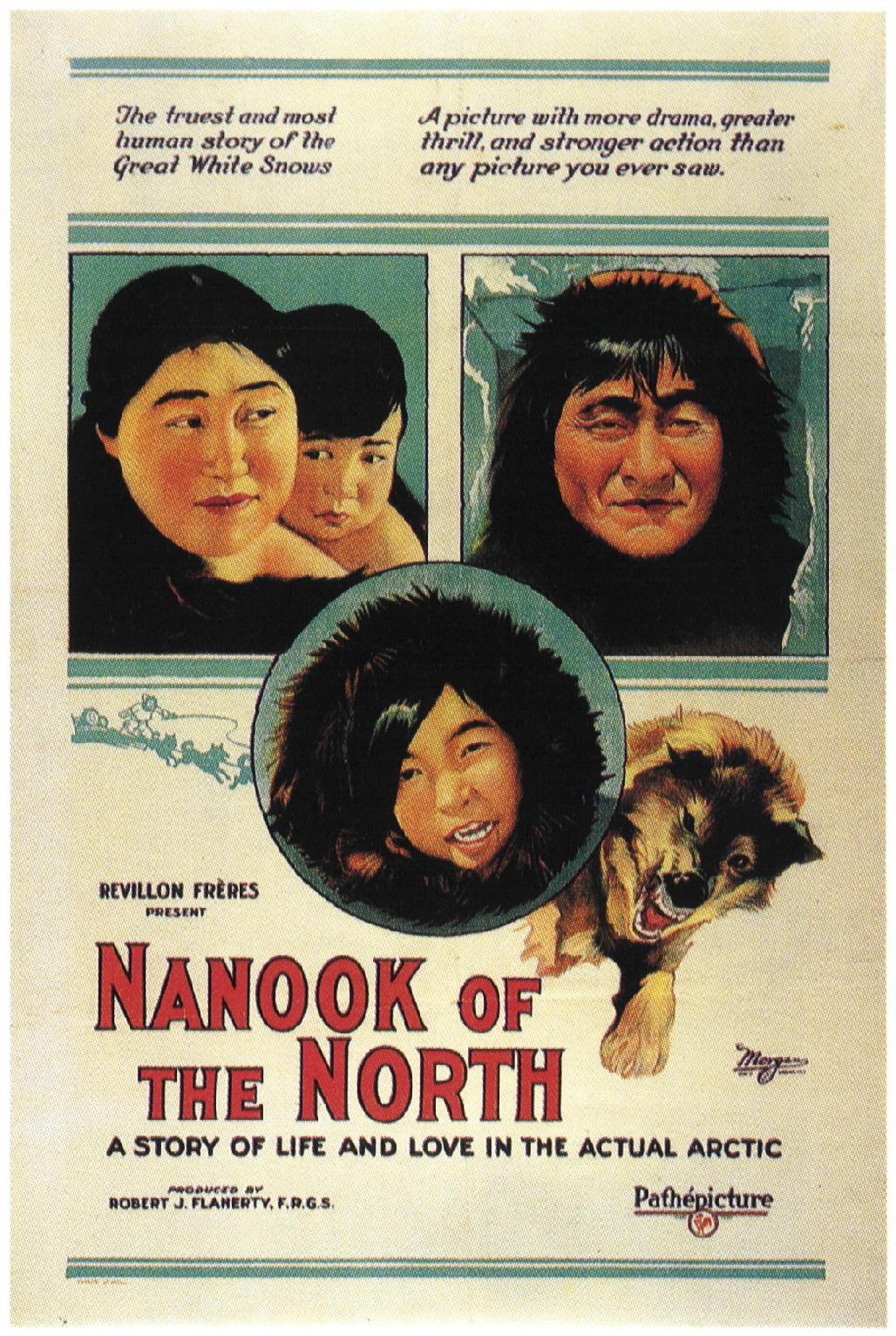
Nanook of the North follows a hunter and his screen family through the changing seasons of northern Quebec. Robert Flaherty's silent film moves between journeys, hunting and the work of making shelter. Fishing and the pursuit of walrus, fox and seal give it an episodic shape. Summer travel gives way to winter sled journeys, with finding food and somewhere to sleep determining each day's activity.
The final hunt leads into a difficult journey home. After the family pulls a seal through a hole in the ice and eats, the dogs receive their share. Their fighting tangles the sled harness and delays departure. Darkness approaches while the family is still far from shelter, and a storm prevents them from reaching their own snowhouse. They take refuge in an abandoned igloo, laying out furs and preparing the interior for the night. The adults and children settle inside while the grown dogs remain outside in the blowing snow; the puppies have a place within. The ending contrasts the enclosed resting place with the exposed animals. Feeding the dogs has led to a new danger even after the successful hunt. The titles describe the weather as a threat, and the journey ends with temporary safety rather than a final conquest of the landscape. This is the film's constructed survival story, arranged around an urgent need to get indoors before the weather overwhelms the travellers.
That screen family was assembled for the camera. Allakariallak plays Nanook, and the women presented as his wives were not his wives in life. The trading-post visit also turns a performance into an apparent encounter with unfamiliar technology. A trader plays a gramophone record, and Nanook examines and bites it. Allakariallak already knew what a gramophone was; the comic misunderstanding was scripted. Hunting with traditional weapons likewise recreates an earlier way of life, since Allakariallak also used a gun. The igloo interiors required another kind of reconstruction. A normal-sized shelter could not accommodate the camera, and a larger version still did not admit enough light. Part of the dome was removed to allow the interior to be photographed. The domestic images therefore depend on a structure altered for filming. These choices concern different things: invented relationships, a staged joke and the practical limits of the camera. Together they make it misleading to read every scene as a spontaneous record of how this particular household lived.
Before introducing Nanook, the film tells of Flaherty's earlier northern journeys and the loss of his first footage in a fire. The opening then places the camera over moving water and drifting ice, bringing the traveller's viewpoint into the landscape. Nanook's activities supply the following episodes: he makes fire from moss, prepares a kayak, hunts a walrus and shows the husky puppies. At the trading post, the gramophone joke places him in a staged encounter with the trader's technology. Building an igloo and travelling across the snow return the story to food and shelter. These are selected situations within a portrait, rather than successive steps toward a single destination. Flaherty's intertitles present Nanook as cheerful and untouched by modern civilisation, even though the participants knew guns, gramophones and Western clothing. The film's apparent distance from modern life was a choice made within a region already involved in the fur trade. Nanook's household provides the human centre, but the title cards repeatedly ask its individual members to stand for a whole people.
The place and the participants have names beyond that story. Filming took place with the Inuit of Inukjuak, then known as Port Harrison, in Nunavik, during 1920 and 1921. Maggie Nujarluktuk performed the fictional role of Nyla. The French fur-trading company's financial support also meant that the film served a commercial interest in the region it depicted. The Flaherty organisation's centennial statement describes Nanook and Nyla as fictional characters in staged scenes and acknowledges the Indigenous erasures in the film's construction. That matters when its apparently intimate family portrait is taken as a description of Inuit people generally. The people on screen supplied their presence and skills, while the finished work selected the identities and relationships under which audiences encountered them. Its release through Pathe Exchange brought those choices to viewers far from Nunavik. The film's international success spread a particular outsider's image of Inuit life, giving the questions about representation a consequence beyond whether an individual sequence had been arranged. Its warmth toward the characters did not remove that unequal power to define them.
Inuit participation also extended to the filmmaking itself. They helped choose scenes, repair the camera and develop the film, and Flaherty showed them the rushes. The images combine close portraits with broad stretches of landscape: a face framed by an igloo doorway sits against expanses where travellers appear small in the snow. The contrast gives individual people room within the journeys, even as the surrounding country dominates their movement.