
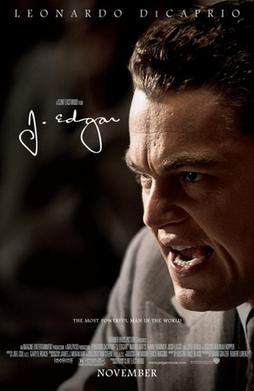
Behind the film
- Year
- 2011
- Director
- Clint Eastwood
- Writers
- Dustin Lance Black
- Runtime
- 2h 17m
- Genres
- Biographical, Drama, Flashback, Lgbtq-related
- Production
- Imagine Entertainment, Malpaso Productions
- Country
- United States, United Kingdom
- Cast
- Armie Hammer, Naomi Watts, Josh Lucas, Judi Dench, Ed Westwick, Leonardo DiCaprio, Lea Thompson, Dermot Mulroney
About the film
Contains story spoilers.
Clint Eastwood’s film begins with an elderly J. Edgar Hoover dictating his memoirs to young agents from the FBI publicity office. He insists that they record his side of the story, and the movie keeps interrupting that account with scenes from his earlier life. The frame matters because Hoover’s recollections are designed to preserve his public image. He describes an agency built on order and evidence, while scenes from his career show him making the Bureau’s reputation part of his own. The film moves between the man who is shaping his story and the younger official whose choices gave him the power to shape it.
The account begins in 1919, after a bomb explodes at Attorney General A. Mitchell Palmer’s home. Hoover watches officers mishandle evidence and decides that disciplined forensic work should guide investigations. He joins Palmer’s anti-radical campaign, which leads to the raids on suspected Bolsheviks and anarchists. The film gives Helen Gandy an early entrance: Hoover takes her to the Library of Congress to show off its card catalogue, hoping to impress her. She declines his romantic overtures, so he asks her to become his secretary instead. His mother, Annie, has already taught him that the family name must be made great, and the film connects that pressure to the public identity he is building.
The raids make Palmer politically vulnerable after Hoover’s agents carry guns despite being forbidden to do so. Palmer loses his position, but the next attorney general, Harlan Fiske Stone, promotes Hoover to lead the Bureau of Investigation. Hoover personally interviews Clyde Tolson, a law-school graduate, and their first meeting shifts from an awkward interrogation to an easy bond. Tolson helps him choose clothes; the two later travel and eat together, and Hoover promotes him to associate director. The film shows their working partnership growing alongside an intimacy Hoover cannot openly name. His attachment to the Bureau and his closeness to Tolson both depend on loyalty, but he gives the institution a public language that he withholds from his private life.
When Charles Lindbergh’s infant son is kidnapped, Hoover and Tolson travel to the family’s New Jersey home, where local officers have already disturbed the crime scene. Hoover returns to Washington and argues before Congress for federal kidnapping jurisdiction and a centralized fingerprint file. He also establishes the Bureau’s science laboratory. The film then ties investigation to publicity: Hoover is irritated when audiences cheer gangster films, later faces Senator McKellar’s questions about the heroic G-man image and starts feeding reporters accounts of his own arrests. The Bureau’s growing forensic capacity is real within the story, but so is Hoover’s effort to make its successes look like a personal legend.
The Lindbergh case becomes the clearest test of that legend. The film shows Hoover take credit for capturing Bruno Hauptmann, then returns to the trial in the memoir frame, where the laboratory evidence is presented and Hauptmann is convicted. Tolson later corrects Hoover’s version: another agent made the arrest. That correction changes the meaning of the earlier scenes, revealing that Hoover’s account has turned an agency investigation into a tale of individual heroism. Earlier, the film links the investigation to another source of pressure: Annie blames her son for failing to save the kidnapped child. Public recognition cannot satisfy the demands he faces at home. Tolson, rather than a courtroom witness, becomes the person who punctures the memoir’s self-portrait and forces Hoover’s partner into the role of his most intimate critic.
As Hoover’s power grows, he and Gandy maintain files on politicians and public figures. In one meeting with Franklin Roosevelt, Hoover raises private information about Eleanor Roosevelt; years later he confronts Attorney General Robert Kennedy with material about the Kennedy family. The film presents these encounters as pressure tactics that protect Hoover’s control of the Bureau. He also orders surveillance of Martin Luther King Jr. and gathers recordings meant to force King to refuse the Nobel Peace Prize. King accepts it anyway. Tolson and Gandy object to Hoover’s decision, but he turns on them for questioning him. His collection of information is no longer only an investigative resource; he uses it to make oversight feel dangerous to the people who might challenge him.
The private story tightens as the public one reaches its end. After Tolson challenges Hoover’s plan to marry actress Dorothy Lamour, the argument becomes a physical fight and ends in a kiss; Hoover then retreats again. His mother’s warning about homosexuality has shaped what he permits himself to acknowledge. Later, after Nixon’s inauguration, Hoover worries that the new president will dismantle the Bureau, while Tolson urges him to retire before his own mythology traps him. Hoover dies, Nixon praises him on television, and White House aides search his office for the files. Gandy has already destroyed them. Tolson visits Hoover’s body and covers him with a bedspread. His reading of a love poem gives their relationship a private memorial alongside the public tribute and the destruction of the files.