
Behind the film
- Year
- 1953
- Director
- Jean Negulesco
- Writers
- Nunnally Johnson
- Runtime
- 1h 35m
- Genres
- Romantic comedy, Comedy drama, Musical, Romance
- Production
- 20th Century Studios
- Country
- United States
- Cast
- Marilyn Monroe, Betty Grable, Lauren Bacall, William Powell, David Wayne, Rory Calhoun, Cameron Mitchell, Fred Clark
About the film
Contains story spoilers, including the ending.
How to Marry a Millionaire brings Lauren Bacall, Marilyn Monroe and Betty Grable together as Schatze, Pola and Loco, three models looking for wealthy husbands in New York. Jean Negulesco directs, and Nunnally Johnson both writes and produces. The women pool their resources to rent a fashionable apartment they cannot comfortably afford, hoping the address will help them enter the lives of rich men. Their expensive surroundings are part of the courtship plan before any husband has agreed to pay for them.
Schatze takes charge of the apartment, which belongs to Freddie Denmark, a businessman avoiding trouble over unpaid taxes. Pola brings in Loco, who arrives with almost no money but several bags of groceries. Tom Brookman has paid for the food and carried it upstairs. After three months without an engagement, Schatze begins selling the furniture to cover the rent. J. D. Hanley appears to offer the answer: he is older, wealthy and willing to entertain the women. Loco meets another rich man, Waldo Brewster, whose complaints about his wife do not discourage her from accepting an invitation to his lodge in Maine. She thinks he means an Elks Lodge, rather than a private house.
Loco falls ill with measles in Maine, delaying the return to New York. She meets forest ranger Eben Salem and mistakes the land he supervises for land he owns. Learning that he is a state employee disrupts another assumption about a possible husband. Pola has a different problem: she refuses to wear the glasses she needs, fearing that men will find them unattractive. While travelling to meet the fraudulent J. Stewart Merrill in Atlantic City, she boards a flight to Kansas City instead. Freddie is aboard, wearing glasses himself. He encourages her to wear hers, and the encounter becomes a romance. Her mistaken journey takes her away from Merrill and towards a man who likes her without requiring her to conceal her poor eyesight. Freddie has been trying to recover papers that will explain his financial trouble: his accountant took money intended for the tax authorities. The flight also puts him on the way to confront the accountant.
Schatze continues to reject Tom because she thinks he has little money, although he is wealthier than the man she wants to marry. Her handling of the apartment furniture keeps bringing the practical cost of her scheme back into the story. Pola bumps into objects and has trouble reading because she will not put on her spectacles. Loco repeatedly misreads what a man is offering, first with the lodge and then with the forest. Jennifer Garlen, writing for Classic Movie Hub, points to these different misunderstandings in her account of the women. The film also moves beyond the apartment into views of New York Harbor, fashion displays and snowy Maine scenery. The costumes and the ski lodge supply different settings for the same pursuit of a comfortable life.
Johnson drew the screenplay from Zoë Akins’s The Greeks Had a Word for It and Loco by Dale Eunson and Katherine Albert. Bacall was his preferred Schatze, but casting her still involved a screen test. Turner Classic Movies recounts that Johnson wanted the studio to see that the established dramatic actress could handle comedy. Bacall had appeared opposite Humphrey Bogart in To Have and Have Not and The Big Sleep; this role required a different sort of performance. In her memoir, as quoted by TCM, she remembered liking the script’s humour and tenderness. Johnson persuaded her to test despite her resentment at being asked, and she secured the part. Schatze’s attempt to organise the other women gives her a central position within the ensemble.
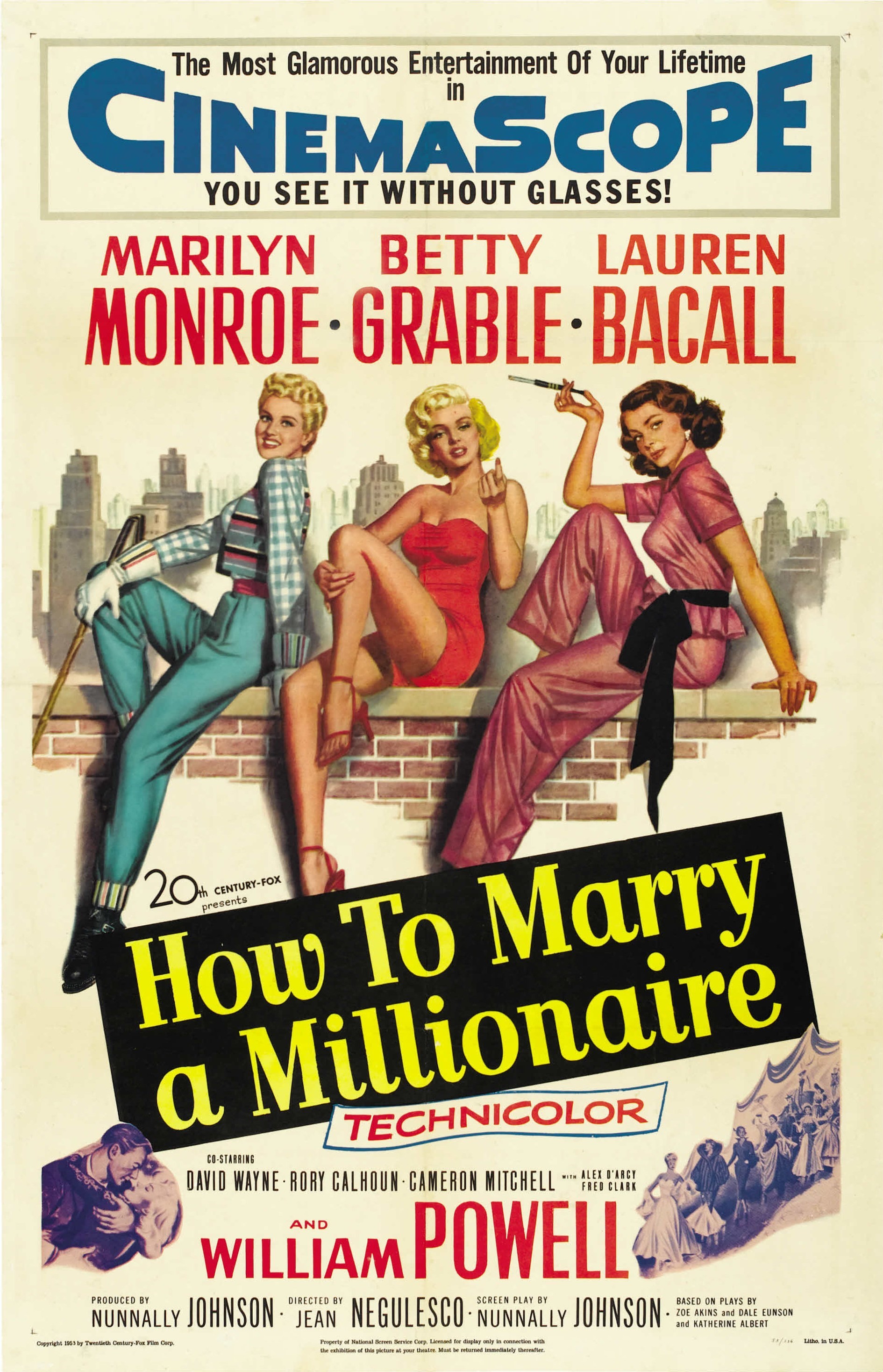
The wide image was another part of the film’s original presentation. How to Marry a Millionaire finished production before The Robe, but Fox released The Robe first. The comedy therefore followed the biblical epic into cinemas as the studio’s second CinemaScope release. The process squeezed a wide image onto film through an anamorphic lens, then expanded it during projection. It offered a different shape from the small television pictures with which cinemas were competing. Negulesco had to adjust the framing of his scenes to an anamorphic lens that made familiar compositions more difficult. The format had to accommodate conversations among the models as well as the more expansive views of the city and countryside.
An orchestral introduction comes before the story: Alfred Newman conducts music from Street Scene, with the orchestra returning briefly at the close. Schatze eventually admits to J. D. that she loves Tom and cannot marry him honestly. He releases her from the arrangement without revealing Tom’s wealth. After she marries Tom, three couples celebrate in a diner. His claim to be worth about two hundred million dollars sounds like a joke until he produces thousand-dollar bills. The women faint, leaving their husbands to toast them.