
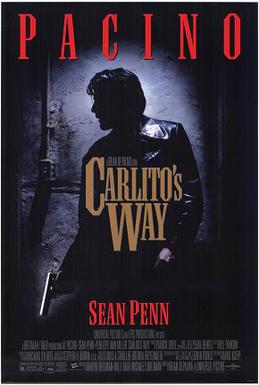
Behind the film
- Year
- 1993
- Director
- Brian De Palma
- Writers
- David Koepp, Edwin Torres
- Runtime
- 2h 24m
- Genres
- Drama, Crime, Thriller, Crime drama
- Production
- Epic Records
- Country
- United States
- Cast
- Al Pacino, Sean Penn, Penelope Ann Miller, John Leguizamo, Luis Gómez, Viggo Mortensen, Adrian Pasdar, Joseph Siravo
About the film
Contains full story spoilers, including the ending.
Carlito's Way begins with the escape already in doubt. A badly wounded Carlito Brigante lies on a stretcher and remembers the events that brought him there. Brian De Palma's 1993 crime drama then returns to a New York of discos and cocaine, where Al Pacino's former gangster has left prison determined to change his life. His plan is modest beside the criminal ambitions around him: earn enough money to join a car-rental business in the Bahamas and persuade Gail, the woman he once loved, to come with him. The flashback makes the story a search for the choices behind a known disaster. Carlito's loyalty to his lawyer pulls against his desire to leave, while Pacino's restrained manner gives his hope of a quieter future a different rhythm from the people surrounding him.
Dave Kleinfeld obtains Carlito's release by exposing illegal wiretapping in the case against him. Carlito means his promise to stay out of crime, but accompanying his cousin Guajiro to a drug deal soon puts him back in a shootout. Guajiro is killed, and Carlito escapes with the money from the deal. He invests in a nightclub, intending to earn the amount needed for the Bahamas. The club also brings him into contact with Benny Blanco, a younger gangster whose attempts to win his attention become a confrontation. Carlito humiliates Benny but lets him leave alive, against the expectations of those around him. His former standing still shapes the way he deals with people even as he tries to stop living by violence. The nightclub creates a route toward his new life while keeping him within reach of the old one.
Kleinfeld turns that remaining connection into a disaster. Having stolen money from his client Tony Taglialucci, he needs Carlito's help with a prison-barge escape. Carlito reluctantly agrees, but Kleinfeld kills Tony and his son Frankie during the operation. Carlito realises the murders will bring retaliation and breaks with the lawyer. When Kleinfeld is hospitalised after an attack, Carlito also learns that his friend has offered to frame him. He visits the hospital, notices a suspicious man in a police uniform, and secretly empties Kleinfeld's revolver before leaving. Tony's surviving son Vinnie enters and kills the unprotected lawyer. Carlito's debt to the man who freed him has become a direct threat to his own freedom and survival. Gail is pregnant, and their departure can no longer wait for a more convenient time.
The pool-hall sequence shows how Carlito's experience operates before anyone begins shooting. Editor Bill Pankow described the importance of keeping the audience with Carlito's point of view and making the room understandable. A split-diopter shot during the drive holds Carlito and Guajiro in focus together. Inside, Carlito notices the man concealed near the bathroom and the other positions from which danger may come. Those details establish the space before the fight breaks it into fast actions. The trick shot at the table and a reflection in sunglasses become parts of his response to the ambush. Pankow's account stresses that the audience needs to know what Carlito has seen, so the violence can remain legible even as it becomes chaotic. The scene turns a supposedly simple visit into a demonstration of the alertness that has kept him alive, followed by a death he cannot prevent.
Sean Penn's Kleinfeld has moved far from the cautious lawyer Carlito remembers. The contrast places Carlito's restraint beside a friend whose intoxication and aggression keep increasing the danger. De Palma recalled the difficulty of filming the scene in which Kleinfeld tries to persuade Carlito to join the boat trip. Penn remained dissatisfied after numerous takes and wanted to continue, while the director needed to photograph the two-shot and Pacino's side before the light was lost. De Palma accommodated additional attempts but eventually had to move on. The account concerns a moment of persuasion before the escape itself, where Carlito must decide whether helping his friend is worth another criminal risk. Penn's performance makes the person asking for loyalty increasingly difficult to trust.
The final pursuit runs through the subway and into Grand Central, putting Carlito's departure within physical reach. De Palma uses the station's escalators and changing levels to hold pursuers and pursued in a shared space. A sustained Steadicam passage makes the movement through the building part of the suspense, with each turn threatening to expose him. The sequence directs attention toward the gangsters behind Carlito and the possibility of reaching the train. Benny's sudden return then shifts the danger to someone the chase has allowed to recede from attention. The shooting reconnects the arrival at the platform with the wounded man shown at the beginning. Knowing that image does not remove the sequence's immediate question of whether Carlito can get through the station; the chase supplies the missing path between his plan to depart and the violent interruption already glimpsed.
Benny shoots Carlito as he reaches Gail and Pachanga. Pachanga admits that he has changed sides, and Benny kills him too. Carlito gives Gail the money and tells her to leave with their unborn child. Dying, he watches a Caribbean advertisement become an imagined scene of Gail dancing on the beach. The destination survives as an image after the journey has failed. The closing return to the stretcher completes the flashback's account of how Carlito's old obligations defeated his attempt to leave. David Koepp's screenplay draws on Edwin Torres's novels Carlito's Way and After Hours, while the film gives that material a fatal frame around one last effort to begin again.