
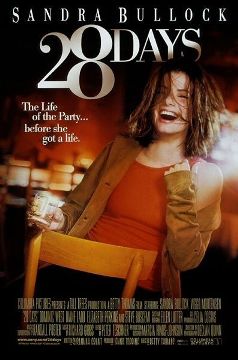
Behind the film
- Year
- 2000
- Director
- Betty Thomas
- Writers
- Susannah Grant
- Runtime
- 1h 40m
- Genres
- Comedy drama, Drama
- Production
- Columbia Pictures
- Country
- United States
- Cast
- Sandra Bullock, Viggo Mortensen, Dominic West, Elizabeth Perkins, Diane Ladd, Steve Buscemi, Alan Tudyk, Mike O'Malley
About the film
Contains story spoilers, including the ending.
28 Days sends Sandra Bullock's Gwen Cummings into a place where the habits of her New York life no longer pass without challenge. A wrecked wedding limousine earns the journalist a stay in rehab, where Steve Buscemi's Cornell leads a programme of rules, shared feelings and unfamiliar rituals. Jasper, played by Dominic West, belongs to the partying life she has left outside. The centre asks her to live differently among people she initially resists.
Gwen's roommate Andrea becomes a friend as Gwen starts taking treatment seriously. Jasper's visits expose his failure to understand what she is trying to do. Eddie, another patient, becomes a friend despite an initial attraction between them. Lily's visit exposes the damage Gwen has done to her sister, which Gwen initially refuses to acknowledge. Andrea's death from an overdose makes the danger immediate. Gwen works to repair her relationship with Lily and completes treatment, but Jasper still expects their old life to continue. She leaves him when he will not support her recovery. A later reunion with Gerhardt in a flower shop gives her another connection to the people she met in treatment. Her departure separates her from Jasper without requiring her to abandon every relationship formed during those weeks.
Bullock spent four days visiting a rehabilitation facility with director Betty Thomas. She stayed nearby rather than sleeping there, spending the days with patients and listening to them. Her account includes the discomfort her presence caused: some people did not want an actress observing such private experiences. Bullock understood that resistance and described promising confidentiality to the people whose lives she was entering. That preparation involved listening to difficult accounts of abuse and addiction, while recognising the difference between someone seeking treatment and someone arriving to prepare a performance. She was also wary of a studio turning the subject into something too comfortable. When discussing the script, she said the heavy moments mattered and she did not want them softened. At the same time, she believed humour could coexist with painful subject matter. Gwen's charm therefore presented a practical problem for the role: Bullock wanted the entertainment people associated with her films while retaining the difficult material that made her interested in this one. Her research gave her contact with people who had reasons to distrust that combination before they had even seen it.
Alan Tudyk remembered Thomas giving the cast room to invent material for the patients. Their accounts of why they were in rehab could become improvised monologues, and some of those monologues reached the finished film. He valued the distinction between being allowed to try something and seeing the director choose to use it. In his account, Thomas had an idea of what the improvisation was serving, rather than simply leaving the actors to talk. He also recalled enjoying the company of Bullock and the ensemble. Those memories describe a working atmosphere in which the supporting patients could supply their own voices. A group treatment scene could contain a personal history shaped by the actor playing the person telling it. Tudyk's recollection locates some of the comedy inside those individual contributions, with Thomas deciding which of them belonged in the movie.
Susannah Grant later described being the only writer on 28 Days and spending considerable time on set, involved in its conversations. That involvement did not remove the difficulty of knowing whether everyone imagined the same film. Drawings, storyboards and table readings could help, but she felt the shared idea remained uncertain until it became a finished movie. Her account places the screenplay and its eventual tone within an ongoing collaboration, even when a single writer held the writing credit.
The project began with Grant and Columbia's Amy Pascal discussing rehabilitation as a possible movie subject. Grant asked whether the story could be funny, and Pascal thought it would need to be. Grant developed an approach and called back a few weeks later. She rejected the suggestion that Gwen's addiction was autobiographical, while allowing that the character might share her sense of humour. That distinction matters to a heroine whose profession can become an excuse for her drinking. Grant was inventing Gwen's situation, rather than presenting her own life under the cover of a fictional name.
Gwen also departs from the romantic rescue that her attractive boyfriend seems to offer. Grant's discussion of a character who cannot yet take care of herself puts that limitation at the centre of the story. Recovery requires Gwen to loosen the hold of a relationship she once enjoyed. Thomas found laughter while visiting rehabs and participating in three days of treatment. Grant wanted Gwen to share the scepticism of an audience reluctant to embrace group therapy. Her interest in the group's soap-opera viewing came from wanting recovery to happen through shared activity outside the therapy room. She described the resistance to group treatment as a feeling that its rituals were too awkward or trite to take seriously. Gwen could give that sceptical viewer someone to accompany into the centre. Grant wanted changes in her behaviour to feel earned, without relying on musical cues to announce a softening that the character had not reached.