
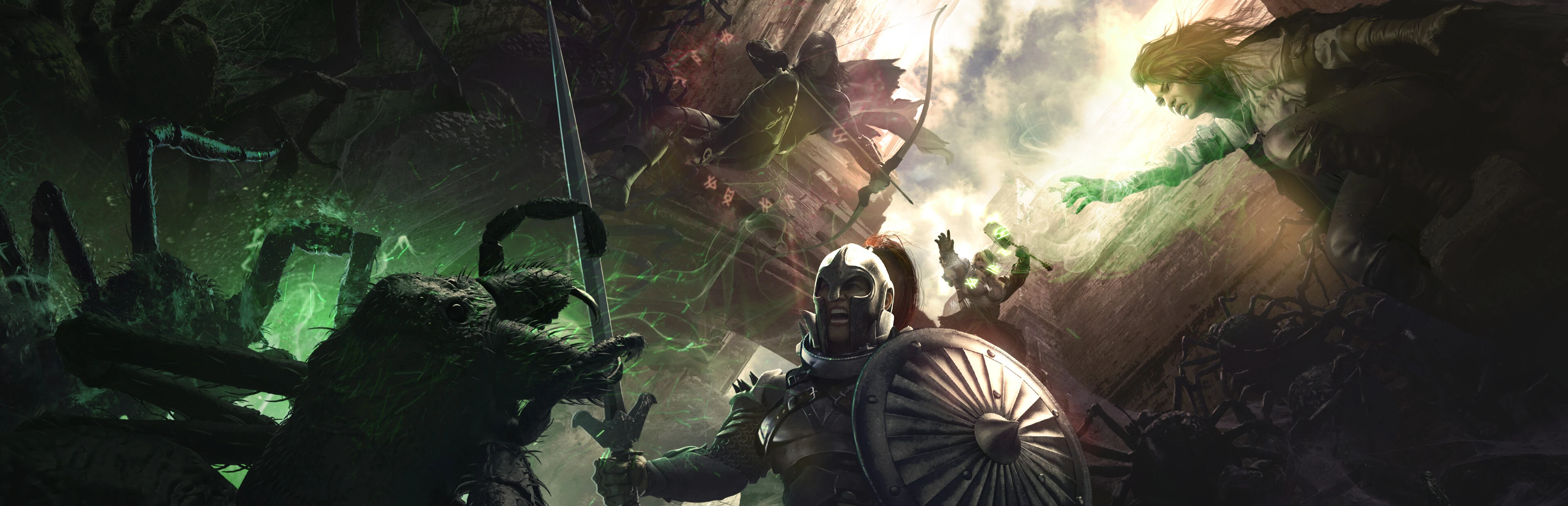
About Solasta: Crown of the Magister
A tabletop ruleset with height, light and falling bridges built into it, plus two add-on campaigns and two class packs. Here is what the base game gives you and what each add-on changes.
You build the whole party
Character creation follows the pen-and-paper tradition: you choose each hero's race, class and personality, and rolling for their stats is the method the store leads with, though the sheet also offers a point-buy allocation if you would rather set the numbers by hand. Because the official campaigns want four characters at once, the design question is not what you want to play but what the group is missing, which is how the store frames the team: four heroes with skills that complement one another. You do not have to build all four yourself either, because the campaigns accept pre-built heroes if you would rather start with a ready-made party.
Personality reaches further than the stat sheet. Every hero expresses themselves in the adventure and has their own voice in dialogue, so the party is also the cast, and the choices you make in conversation become part of the story the group is telling. Planning is about giving the dice better situations, not removing them.
Fight in three dimensions
The dungeons are not flat boards. You can climb, jump or fly around obstacles, evade or surprise enemies from above or below, and push them into chasms or drop things on their heads. High ground is a way to start an encounter with an advantage rather than a nice view.
Size is part of the geometry too. Narrow passages will not fit larger enemies, tunnels open up secret areas, and cover is judged against the size of the creature crouching behind it. The reminder attached to all of it is that the monsters think vertically as well, so a clever route up is often a route something else can take down.
Light is a tactical choice, not a setting
Dungeons hold ancient artifacts and hidden dangers, and the two are lit differently. The store's own description of the light rules is that many dangers hide in the dark, a light source can attract monsters that would otherwise have missed you, some enemies have darkvision, and some may flee from a torch.
That makes lighting a decision rather than a checkbox. A torch can be a weapon against one creature and an invitation to another, which means the question of who carries the light and when it gets lit belongs in the same planning as who stands where.
The add-ons come in two kinds
The paid content splits cleanly into campaigns and classes, and knowing which is which saves you buying the wrong thing. The Lost Valley is a fresh campaign for levels one to twelve, set in a forgotten valley ruled by a tyrant, and it is built to be replayed non-linearly because you decide which factions to side with. The Palace of Ice is the high-level counterpart, a campaign for levels ten to sixteen that takes an experienced party into the frozen lands of the Snow Alliance, and it adds the gnome and tiefling ancestries.
The two class packs are narrower. Primal Calling adds the Barbarian and Druid classes with three subclasses each, six in total, plus the half-orc ancestry and the Wanderer background with its own quest. Inner Strength adds the Warlock, Bard and Monk classes with four subclasses each, nine in the pack on top of the one per class that unlocks if you also own Lost Valley, and it adds the dragonborn ancestry. Three new backgrounds arrive for everyone whether or not you buy that pack.
Several of those improvements were free updates rather than purchases. The level cap went up, character creation gained scars and facial paints, the tutorial became skippable, and the surprise system was reworked to make individual perception checks for each enemy.
Co-op, and a dungeon maker
Solasta supports online multiplayer co-op, and it covers more than the main story. The studio announced it as available in all existing and future campaigns as well as custom campaigns, and the Palace of Ice campaign lists co-op for up to four players, so the whole run is playable together rather than co-op being a side mode. In multiplayer the content follows the host: the studio's own guidelines say all DLC is synced to what the host owns, so the rest of the table does not need the same add-ons. There is no LAN mode, and the multiplayer update was free to everyone.
The Dungeon Maker is the other long tail. You can build your own dungeons and share them, controlling the room layout, the monsters, the treasure, the decoration and even the music, and the Campaign Creator bundles separate dungeons into a campaign with custom monsters, NPCs, merchants and items. For players who finish the stories and still want more, that is the answer.
Should you play it
Yes, if you want a turn-based tactics game that takes verticality and light seriously, and you enjoy building a party rather than a protagonist. The systems reward reading the room before reading your spell list, and the add-on structure lets you buy more of exactly what you liked.
Two things to check first. This page is about the original release and its add-ons, and a separate sequel, Solasta II, is in early access on a newer ruleset, so make sure you are buying the one you want. And decide whether you want a campaign or a class pack, because they add genuinely different things.
Go deeper with V4mp
- Developer
- Tactical Adventures
- Genre
- Turn-based tactical RPG
Explore Solasta: Crown of the Magister further
Explore the wiki for detailed reference pages on the game's world, systems, items and locations.