
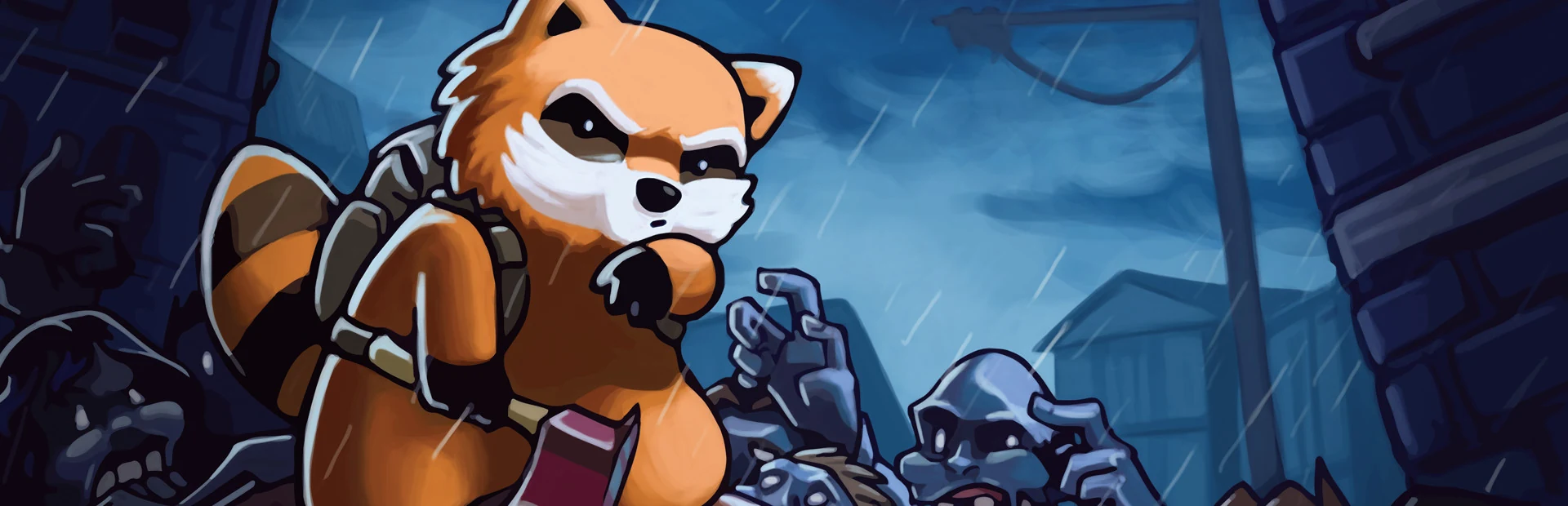
About Project Zomboid
The Indie Stone has been building this survival sandbox since 2013, and Build 42 is the version that finally moved onto the main Steam branch as the default. What it asks of you has not changed. Learn the systems, respect the noise, and treat every run as a rehearsal for the one that lasts.
A survival game that starts with a shopping list
You wake up in Knox Country with a limited set of supplies and a county full of zombies between you and everything else you need. The opening hour is not a tutorial. It is a supply run, and the order you do it in decides whether the first night is a story or an obituary. Water first, because thirst kills faster than hunger and the taps are on borrowed time. Then a weapon that will not snap, a bandage, and a room with one door you can watch.
That list keeps growing. Food, fuel, tools, a generator, seeds, a car that runs. Loot is scattered through houses, shops and warehouses, which means every building is a small gamble: the good stuff is often in the back, and the back is the part with the least exits. The game will tell you what your survivor is feeling through their moodles — thirsty, hungry, bleeding, exhausted, panicked — and reading those icons before they become a crisis is most of what survival actually is.
Death is the lesson, and it costs you everything you learned
When your survivor dies, the skills go with them. You can often drop a new character into the same world and inherit the old one's house and stash, but the levels your last survivor earned are lost, and the new arrival starts with only what the occupation and traits you picked for them grant. Nothing about that is gentle, and it is the point. What you learned personally stays with you though, and that is the game's real teaching method: a run is a chain of decisions, and it is very good at showing you, hours later, which one was a mistake.
The injury system is where that lesson lands hardest. A cut, a scratch and a bite are not the same thing. An infected wound is a local problem you can clean and dress. The Knox Infection is a different beast, and there is no cure for it. Under the default Blood and Saliva transmission a bite infects you every time, while scratches and lacerations only carry a chance, and the sandbox settings can move those odds or turn the infection off entirely — but on default rules a bite is a death sentence rather than a risk. That is why a routine mistake, one zed you did not see behind a door, can end a run that was going well.
The sandbox is the real difficulty setting
Before you start, the game offers a few presets. Apocalypse is the tuned default, Outbreak speeds progression up, Rising is the cosier ramp, and Extinction is the unforgiving end of the scale. But the setting that actually shapes the game is the custom sandbox, where you pick your starting town and rebuild the rules: how many zombies exist and how they behave, how common loot is, how infection spreads, how fast skills grow, even how the new animals and basements are tuned. Two survivors in two sandboxes are playing different games. Turn the pressure down and it becomes a base-building game with a zombie problem. Turn it up and it becomes a horror game about one more night.
The new challenge modes sit at the far end of that. Build 42 swapped in two more alongside the older extremes — one drops you on a skyscraper rooftop, the other fills the world with sprinters — and they exist to take the tools you leaned on away from you. If the sandbox is the game's real design statement, the challenges are its party trick: proof that the systems bend a long way before they break.
Noise is the combat system
Zombies here notice sight and sound, and sound is the one that gets people killed. A gun is a solution and an invitation — it solves the zombie in front of you and tells every zombie in the area where you are. Melee is quiet and needs no ammunition, but it is not free: melee weapons lose condition as you use them and break when they run out, repairs get less effective the more often you patch the same item, and every swing costs stamina. So most good play is unglamorous: fight in doorways, break line of sight, walk instead of sprint, and leave the loot you cannot carry. Build 42's reworked firearms and aiming make shooting feel more deliberate, but a gun remains the loudest decision in the game.
Base building grows out of the same logic. You barricade the windows you cannot watch, close off the rooms you do not use, and slowly turn a house into something that can hold a shelf of food and a generator you run outside, because the exhaust it puts out indoors takes your health down fast and every generator is loud enough to be heard down the street. Carpentry, cooking, farming, fishing and animal husbandry are all long projects that pay off quietly. The fantasy is not clearing the map. It is a place where a bad night is survivable.
Alone, or with the group
Solo is the purest version: one survivor, total control of the pace, and no one to blame. Co-op is the more social one, and it changes the shape of a run more than you would expect. A group can split into roles — a builder, a looter, a cook, someone who scouts — and a shared base grows faster than any solo effort. Split-screen and online sessions are both supported, and dedicated servers keep a world running whether you are there or not.
The costs are real. One player's gunshot is everyone's problem, and the noise that drags a horde onto your friend is the same noise dragging it toward the base you share. Dying on a server means a new character like anywhere else, which is a much bigger deal when the stash you built is now someone else's. Item transfers and timed actions now run on the server, a full anti-cheat suite is enabled on top of that, and the server browser shows ping and player counts. Even so, the honest read is that Project Zomboid is at its best with a small group who share the same patience.
Build 42, Build 41, and the branch behind them
For a long time, "Build 42" meant the opt-in unstable beta, and the version most people owned was still Build 41. That changed at the end of July, when 42.20 became the public stable build and the default launch option on Steam, with hotfixes carrying it forward since. Build 41 has not disappeared — it is still there as the optional legacy branch for anyone who wants to keep their old saves and their old mods. So the build you are playing is now a choice you make in Steam, not something the game does to you.
The unstable branch is still there for testing whatever comes next, and it does exactly what it says. Updates to it can break saves, and a feature you see in the beta is not a promise about the stable game. Step onto it expecting a moving target, or stay on stable and let the hotfixes settle.
Mods are the other half of that decision. Build 42 rebuilt so much under the hood that a lot of Build 41 mods do not carry over, and the Steam Workshop items are tied to the build they were made for. The game gained an official mod manager that can sort load order and flag mods that clash or depend on each other, which is worth checking before you add another one, because mods are version specific and an old one is likely to stop working after a game update. The compensation is that a stable branch gives mod authors a far less changeable target, even though it keeps moving with every hotfix, and the developer has said the post-launch work is aimed at exactly that — better modding support, an optimisation pass, and the mapping and animation tools the community has wanted for years.
What Build 42 actually added is worth naming, because it is not a small patch. The map was rebuilt and extended with new towns, basements and heavier interior detail. Lighting was overhauled and ragdolls arrived. Animals, seasonal farming and a fishing rework landed, alongside a rebuilt crafting and building system with workstations and new skills, a rebalancing of occupations and traits, and a firearms and aiming pass. The game you get today is not just the 2013 game with more zombies on it.
Should you play it
Yes, if you like the idea of a survival game that treats planning as the core mechanic and respects the tension that comes from real consequences. Project Zomboid is slow on purpose, and its best moments are not fights — they are the quiet calls: whether to risk the far house at dusk, whether to fix the car or the fence first, whether to push for one more level of carpentry before dark.
Skip it if you need a story with an ending, a difficulty curve that lets you feel powerful, or a game you can reload when a run goes wrong. It is still in Early Access, and it asks you to bring your own goals. If you can live with that, it is one of the deepest survival sandboxes you can buy — and the one that makes a single gunshot feel like a decision that matters.
Go deeper with V4mp
- Developer
- The Indie Stone
- Genre
- Survival
Explore Project Zomboid further
Explore the wiki for detailed reference pages on the game's world, systems, items and locations.